A town built on water
From Nagoya we booked a day bus tour on Klook that does three towns in one day: Gujō Hachiman, Takayama and Shirakawa-gō. Three towns, one bus, nobody has to drive. First stop, two hours out of Nagoya: Gujō Hachiman, a little castle town in the Gifu mountains that’s known for its water. Clear rivers, springs and canals run right along the streets. It’s also where most of Japan’s plastic food samples are made, and every August the whole town dances the Gujō Odori through the night.
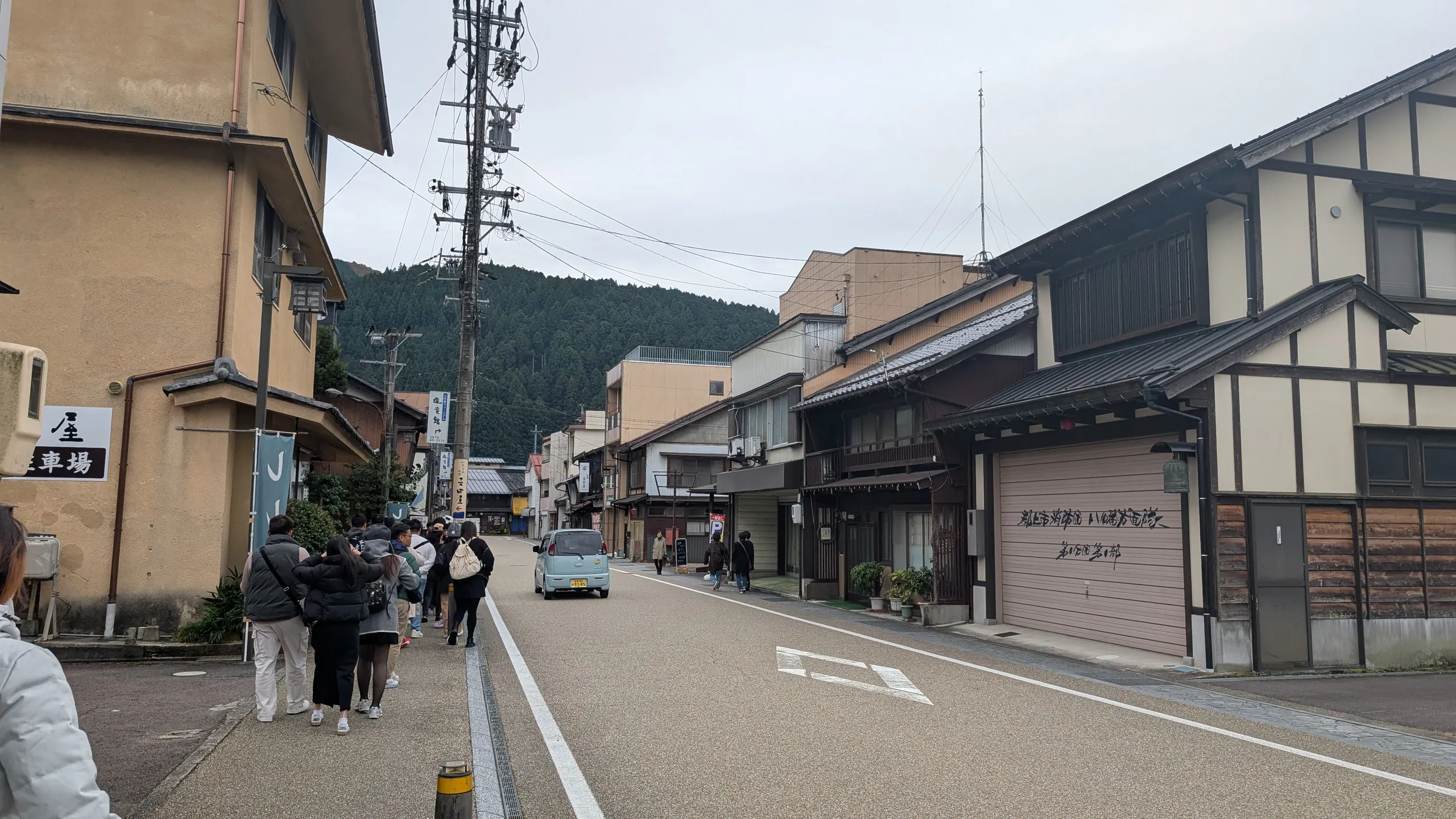
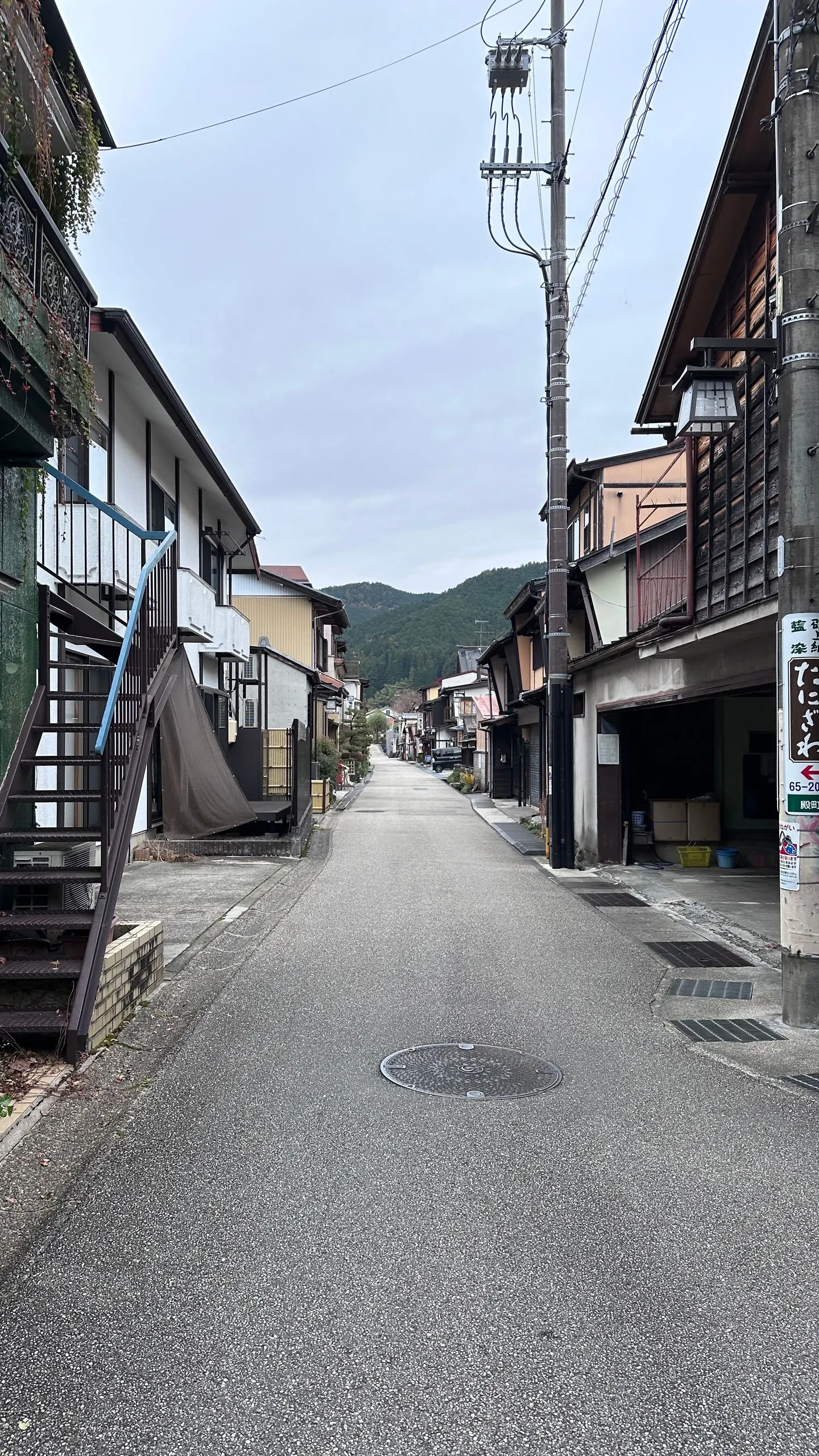
We had about an hour, and on a Tuesday morning in late November we had most of the town to ourselves.
The Yoshida River
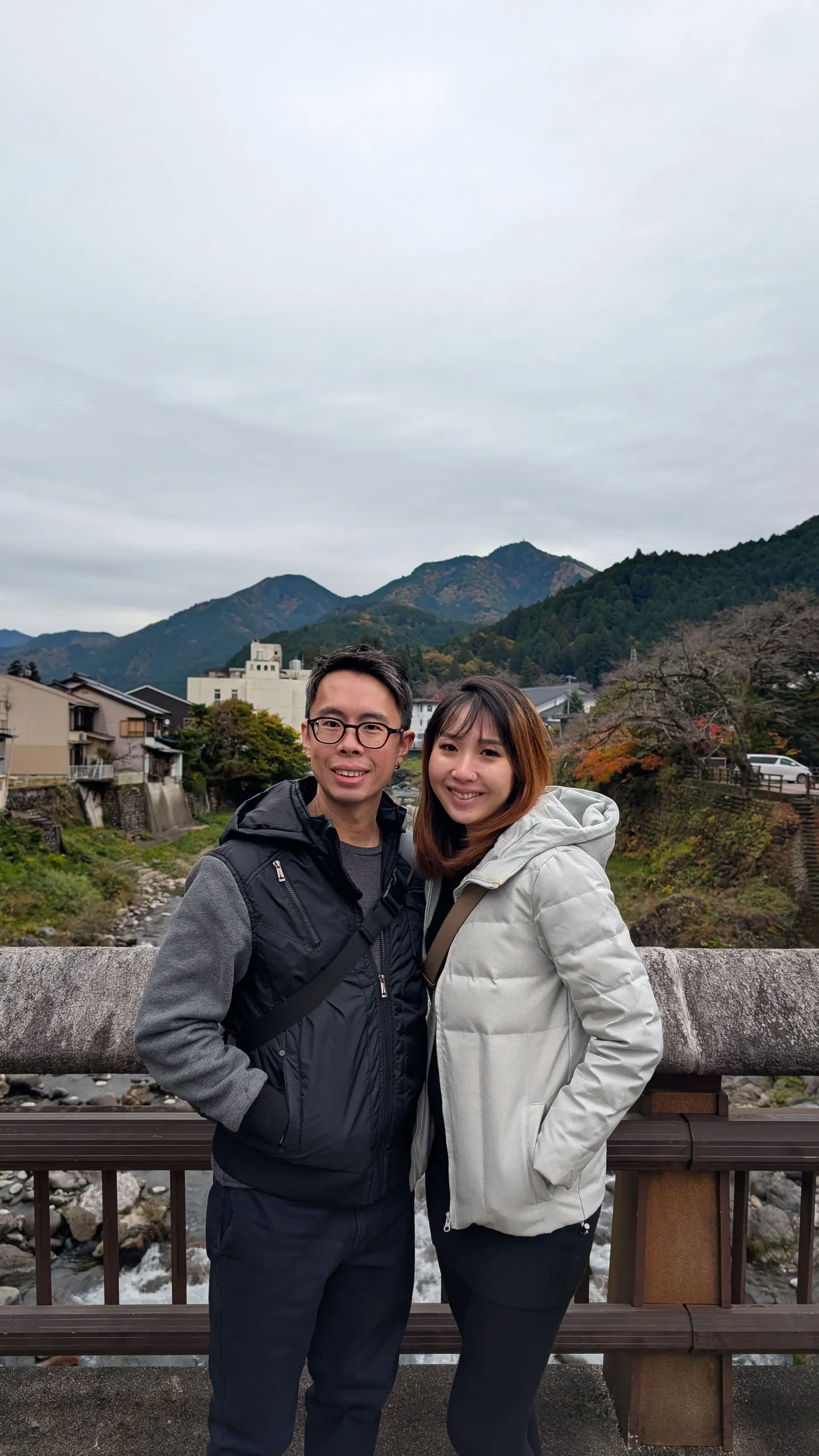
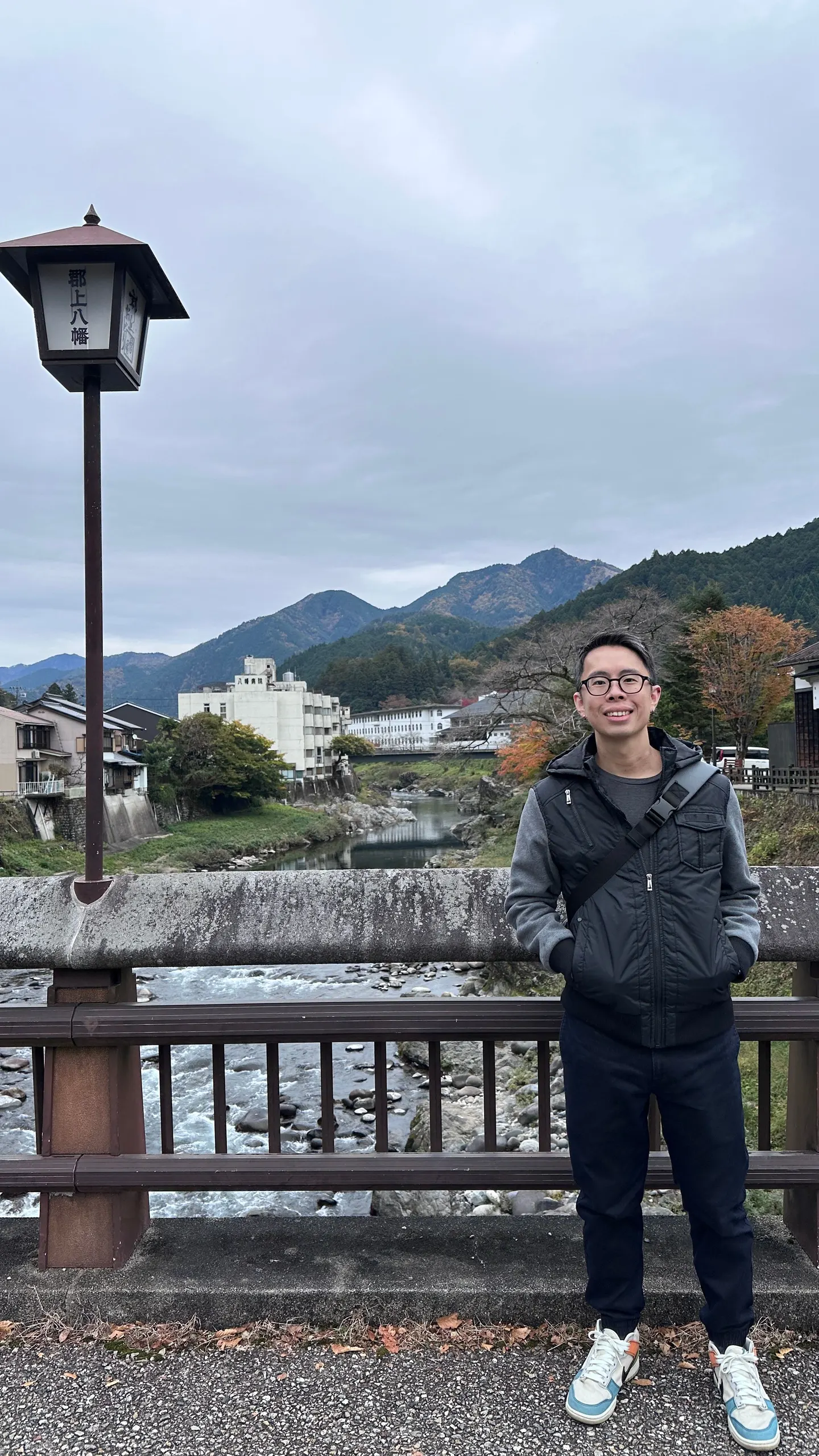
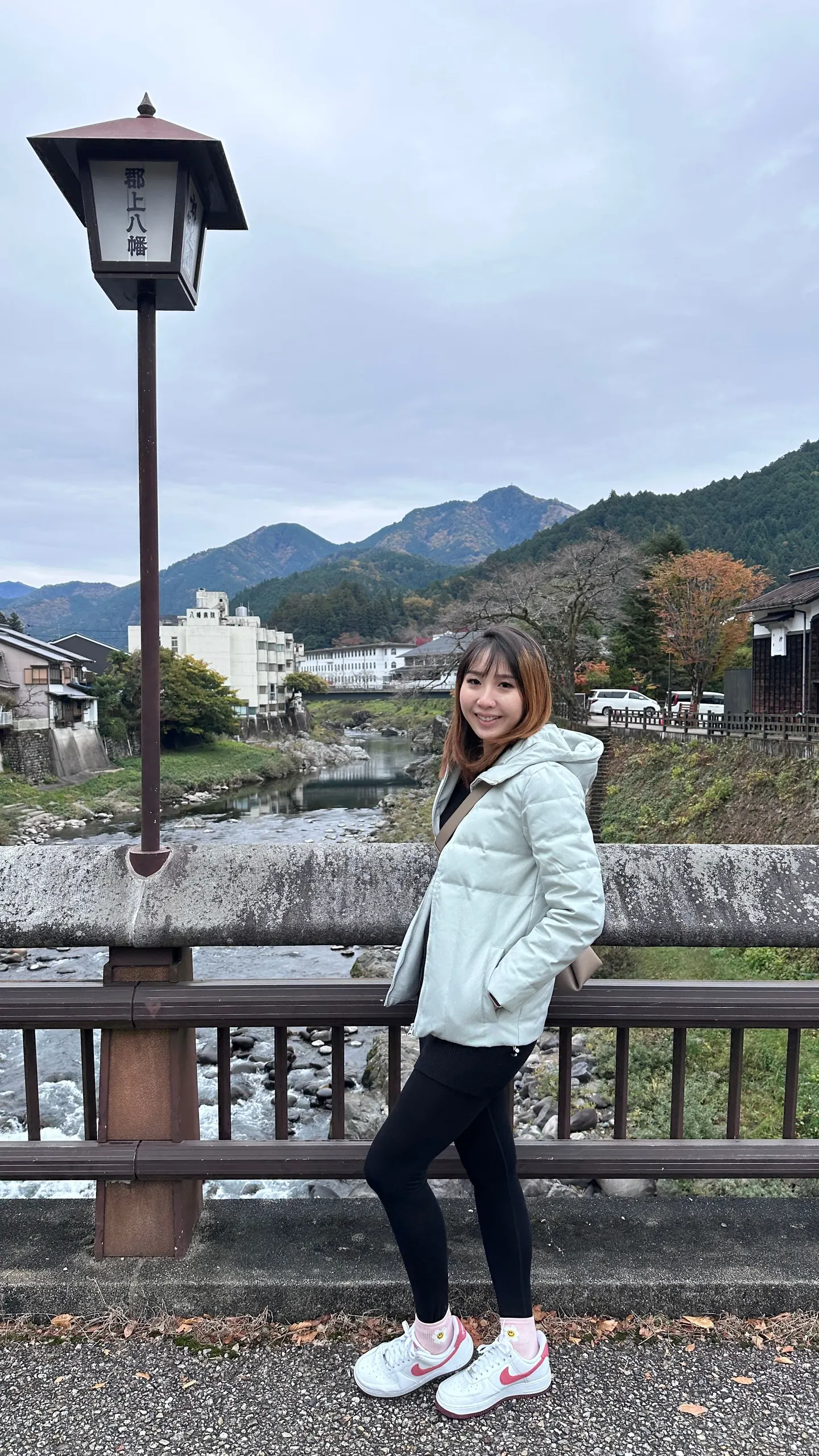
The Yoshida River runs straight through town, and it’s so clear you can count the stones on the bottom from the bridge.
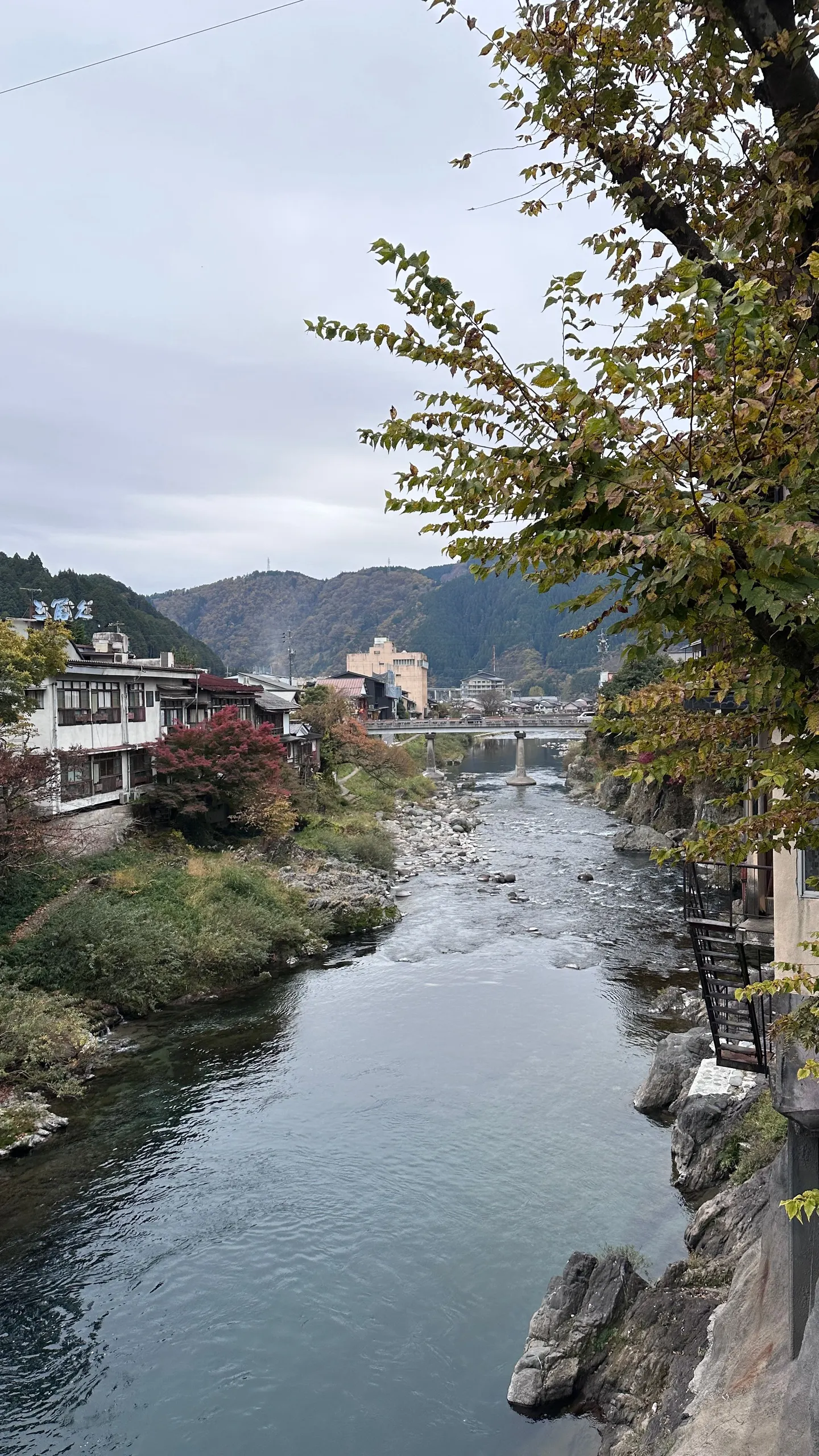
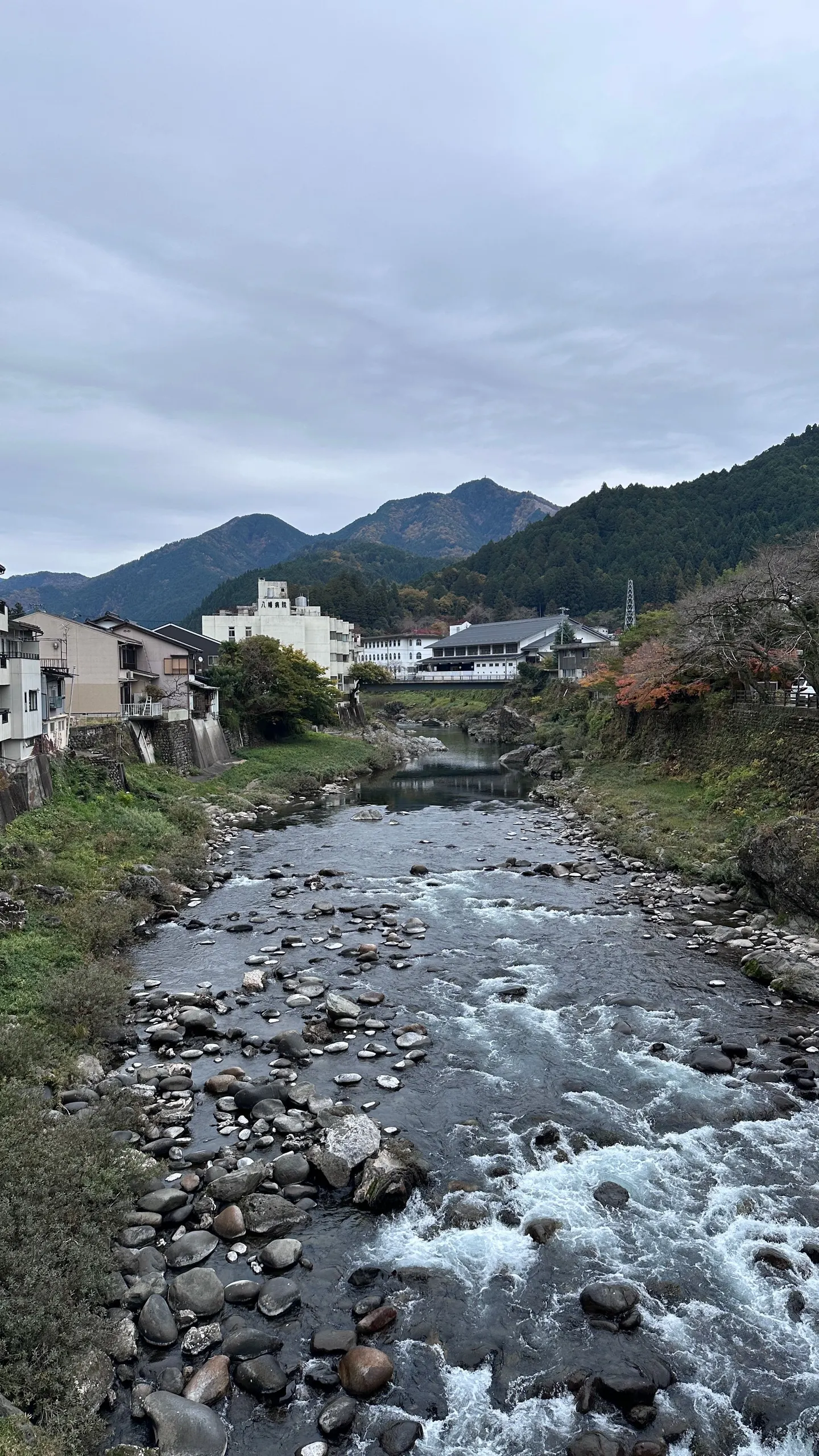
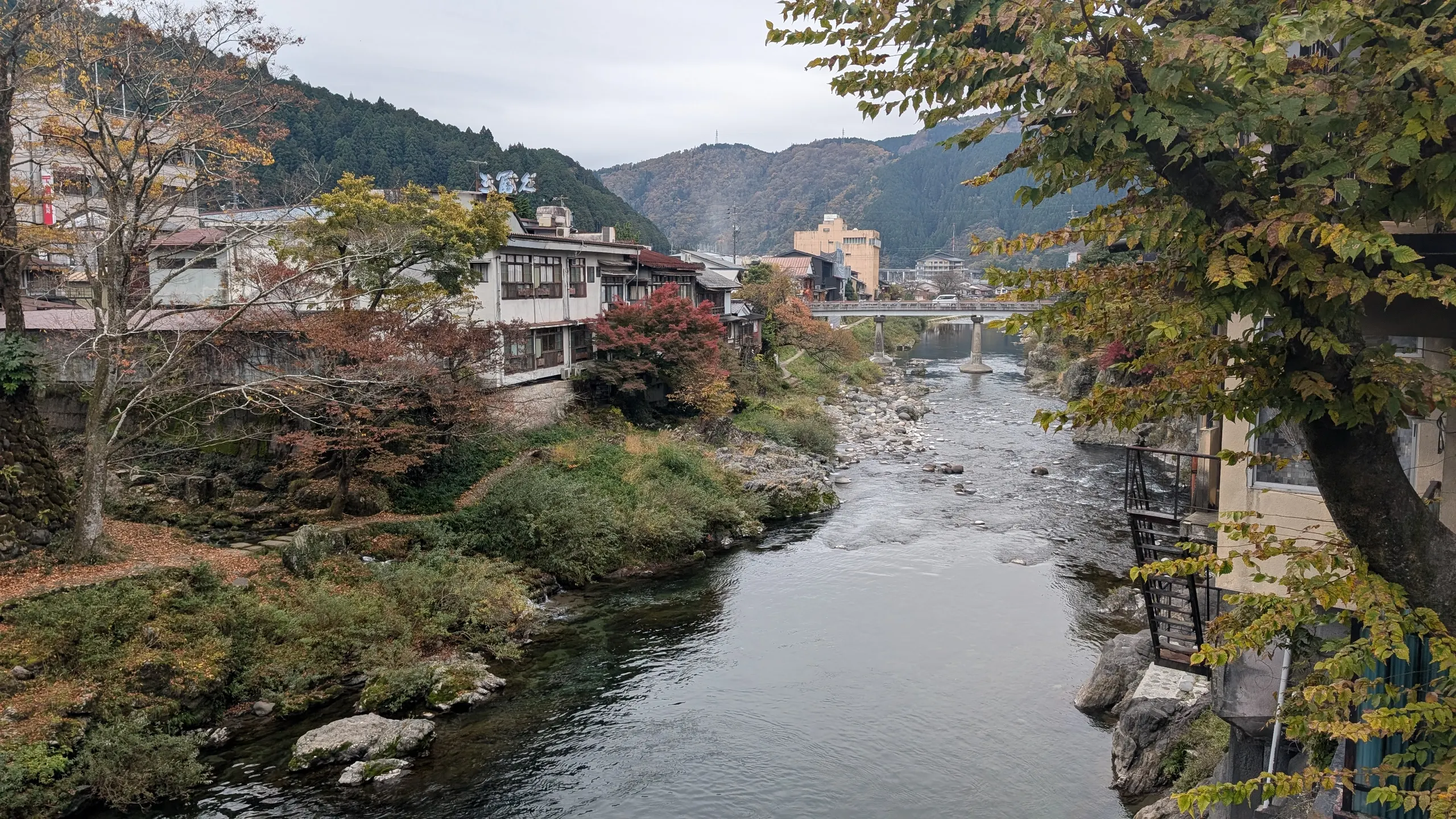
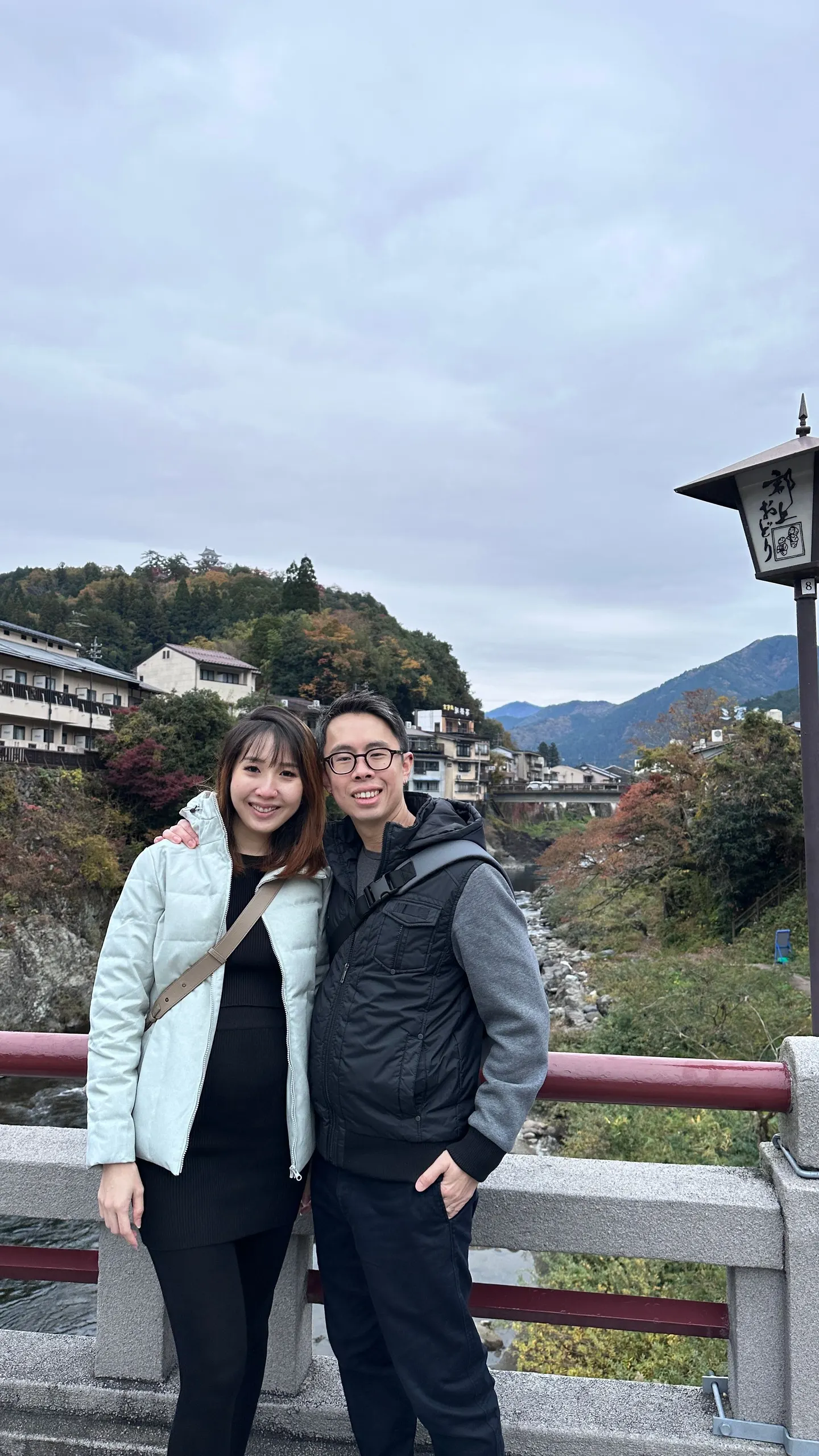
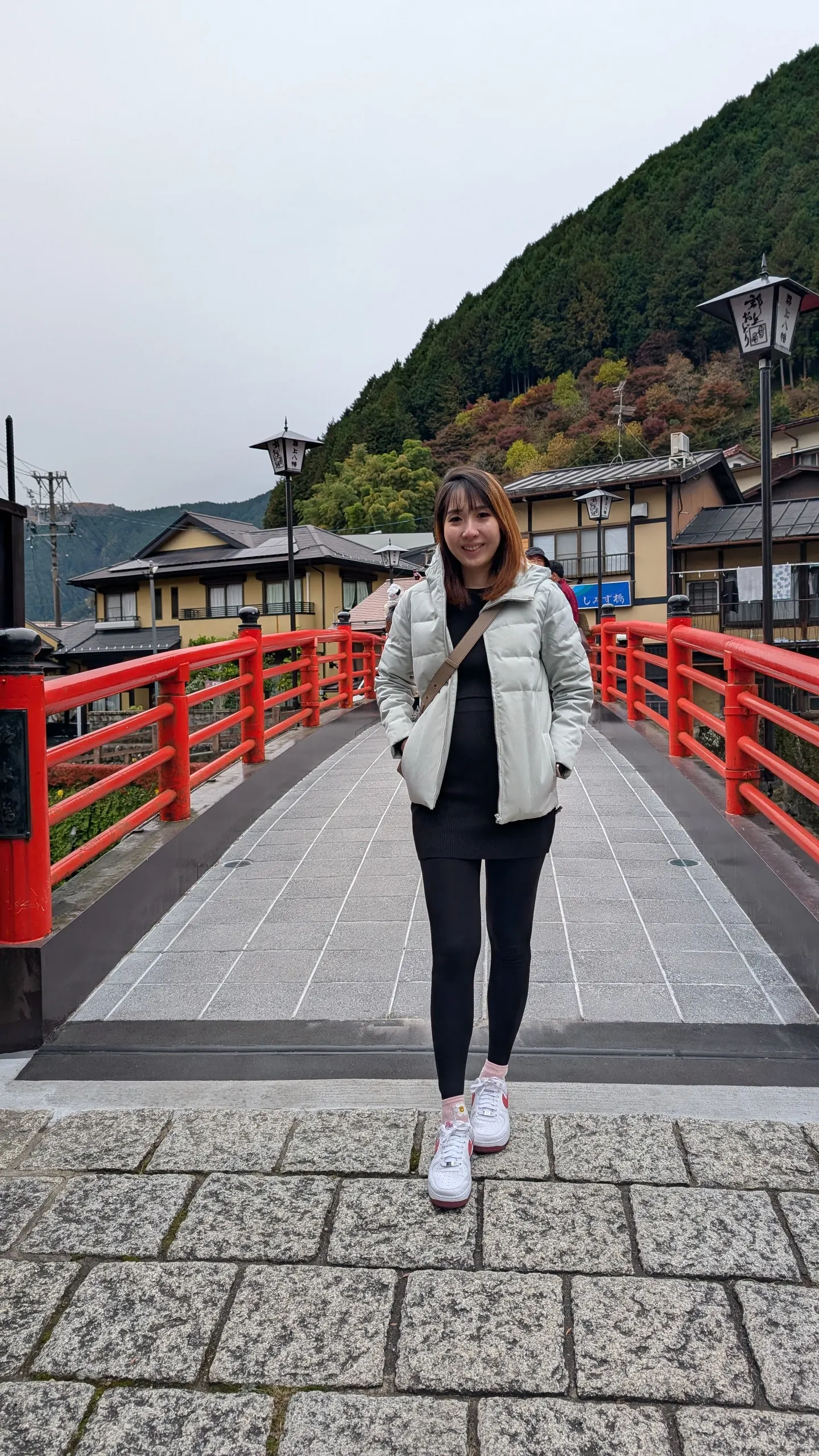
So of course we did the bridge photos in every combination: both of us, me alone, Minmin alone.
Igawa Komichi
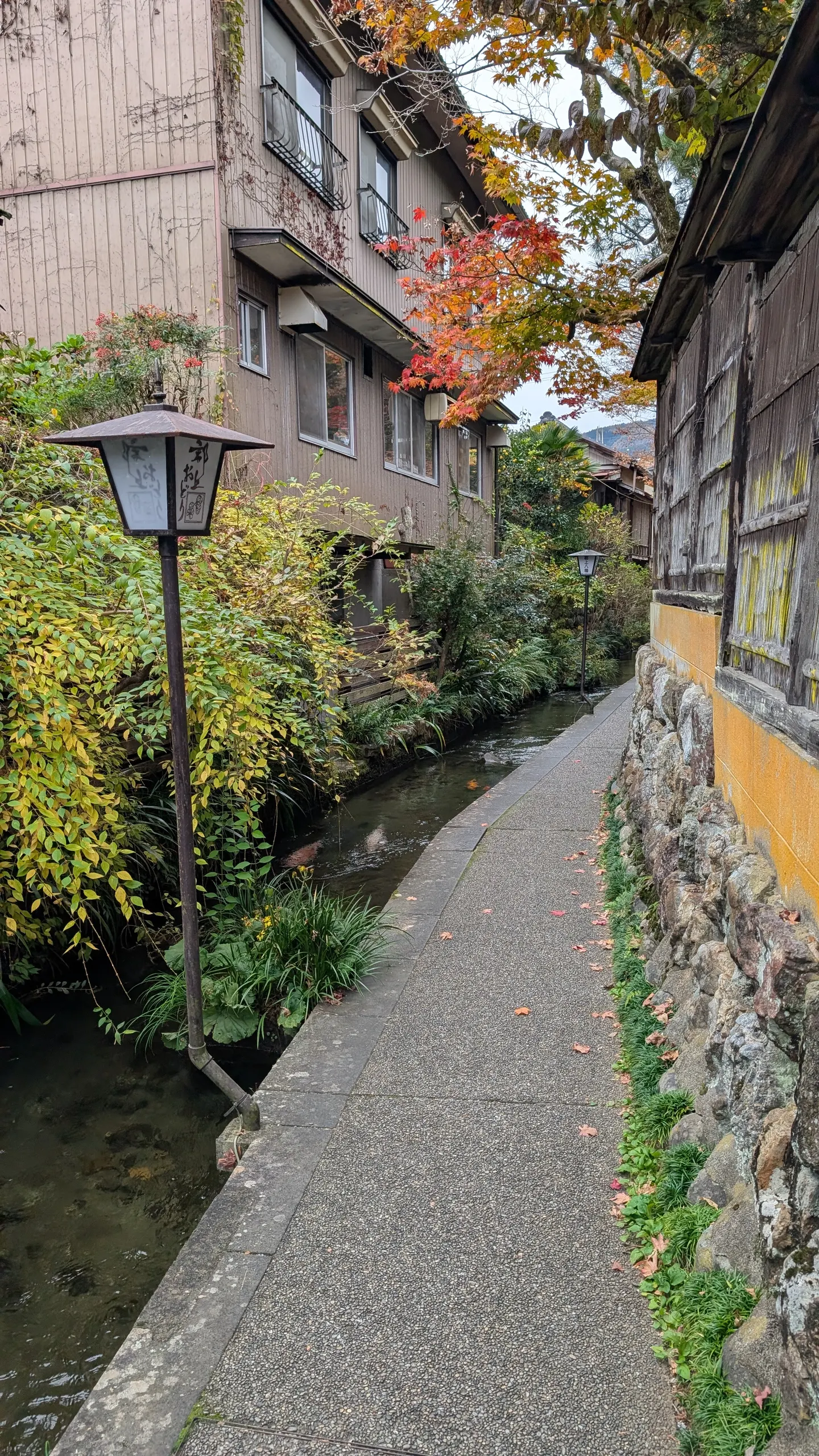
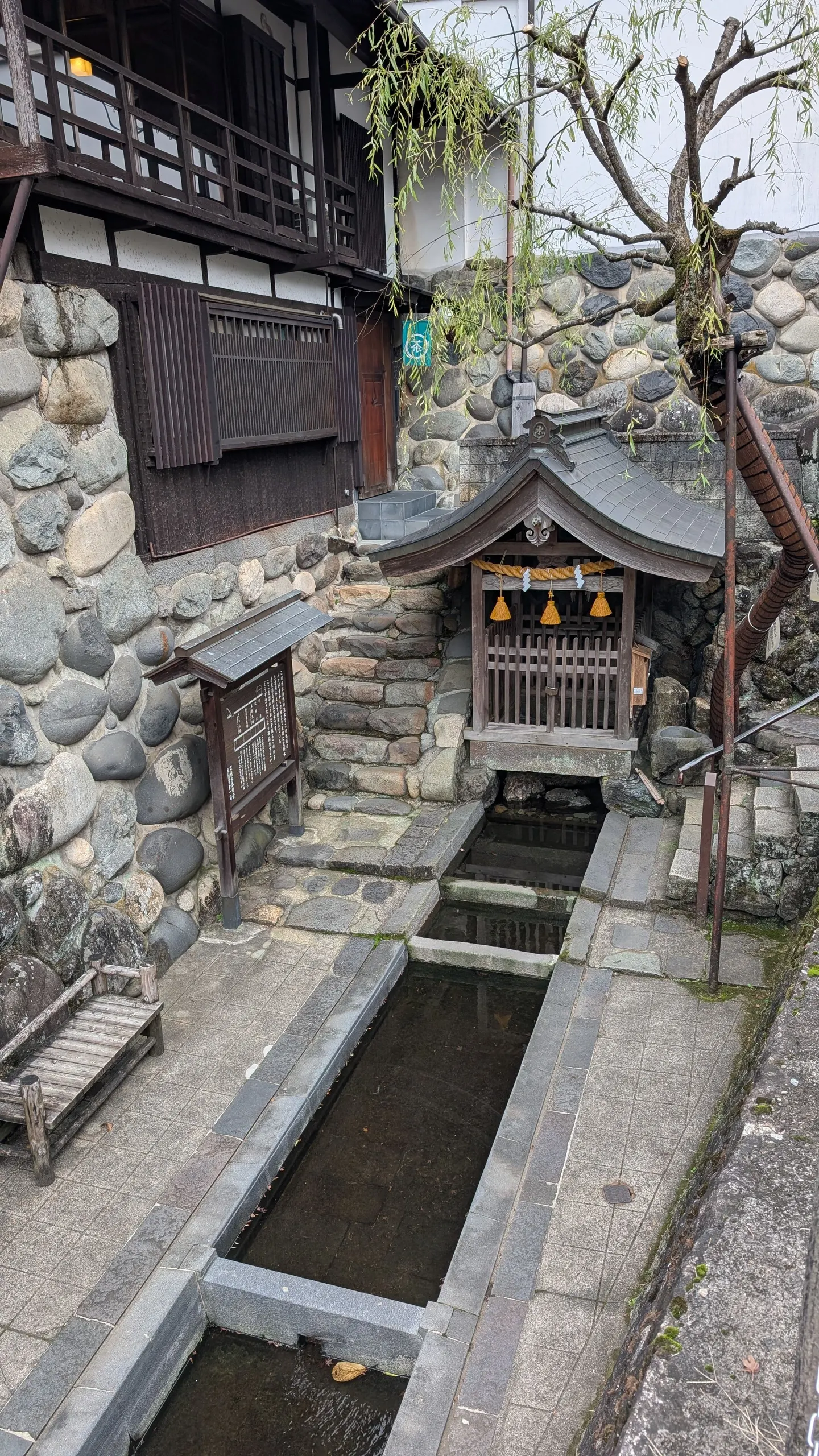
Just off the main street is Igawa Komichi, a narrow stone lane beside a spring-fed canal. The water is crystal clear and full of big fat carp, cruising along like they own the place.
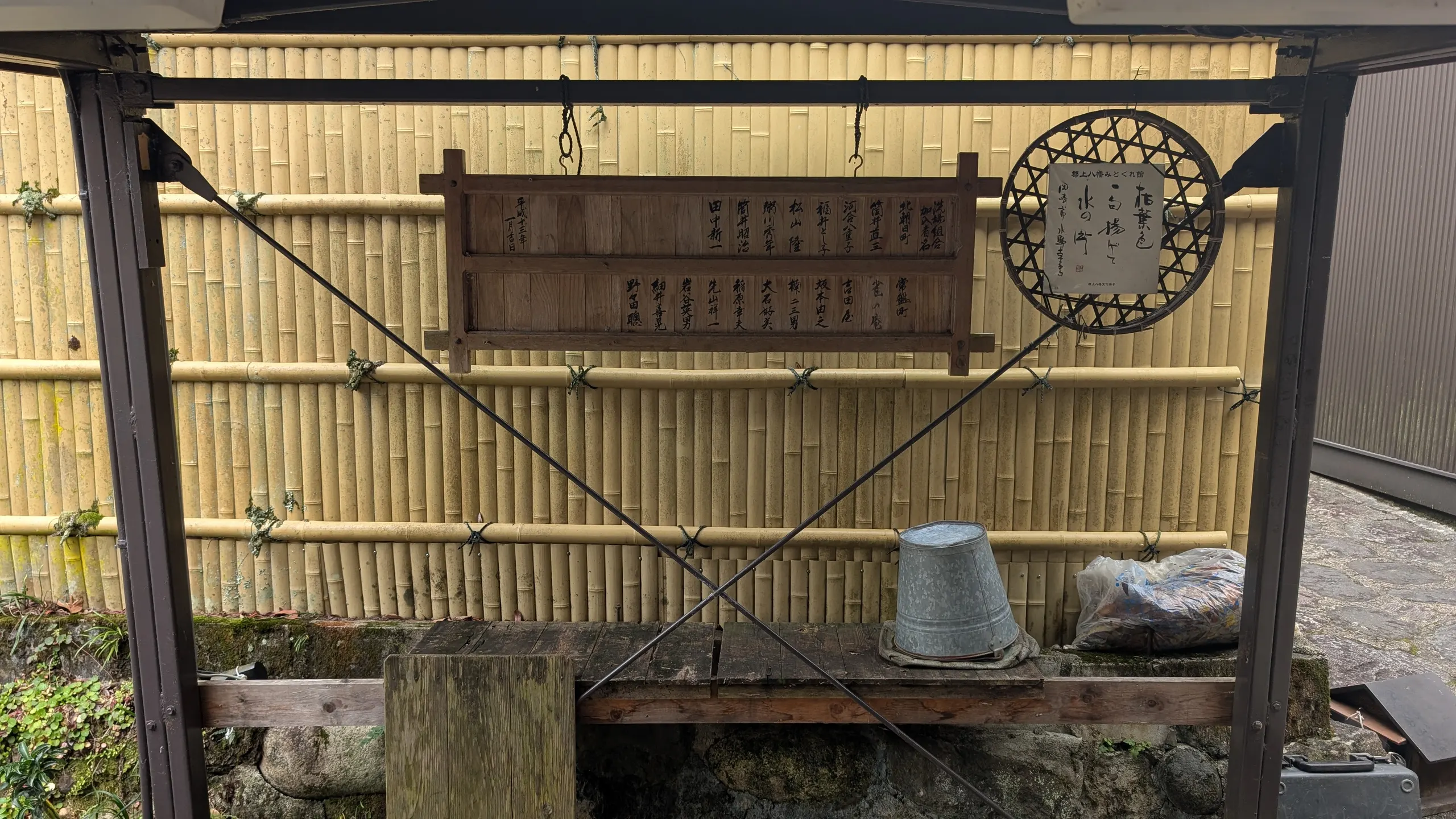
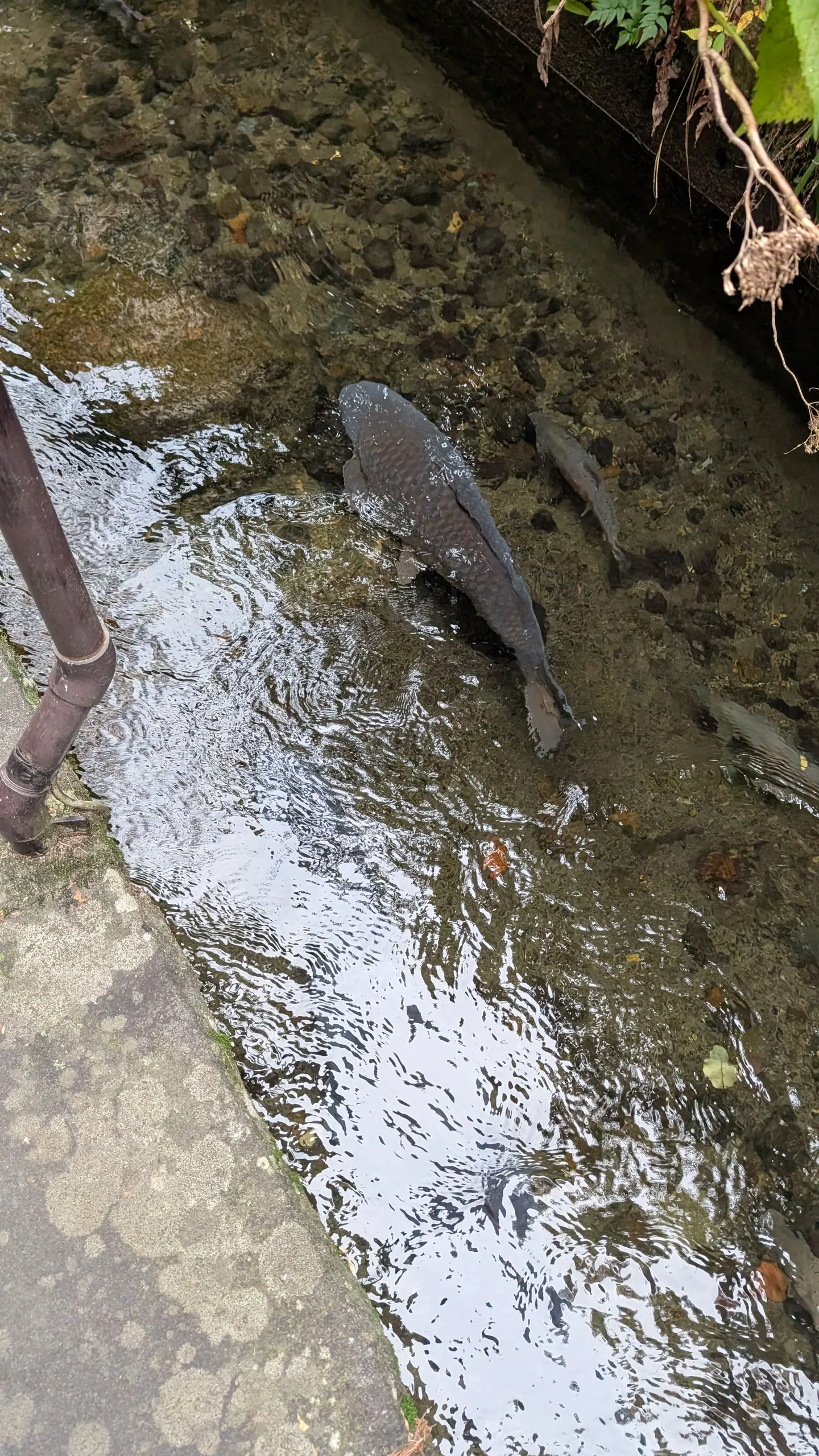
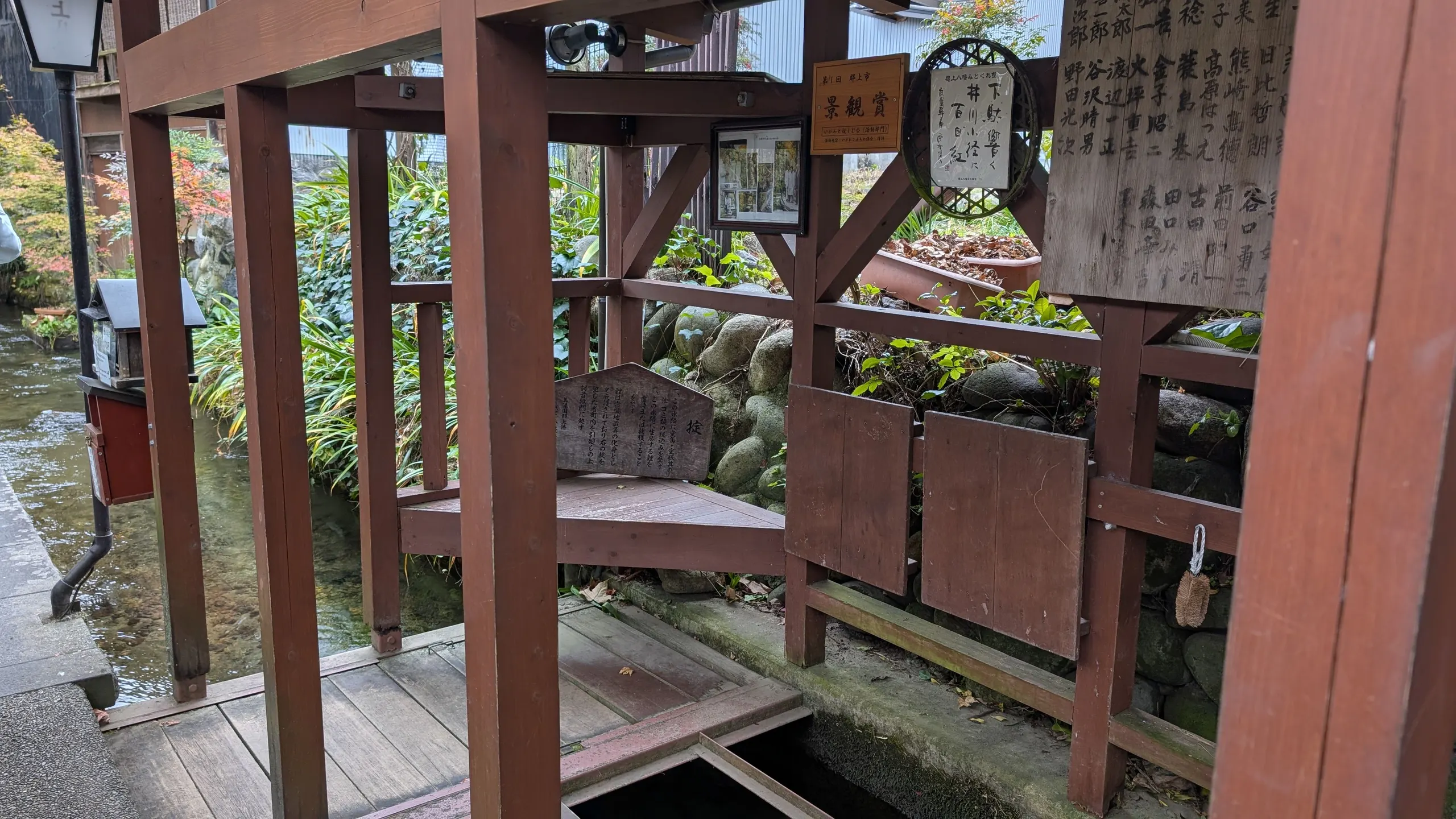
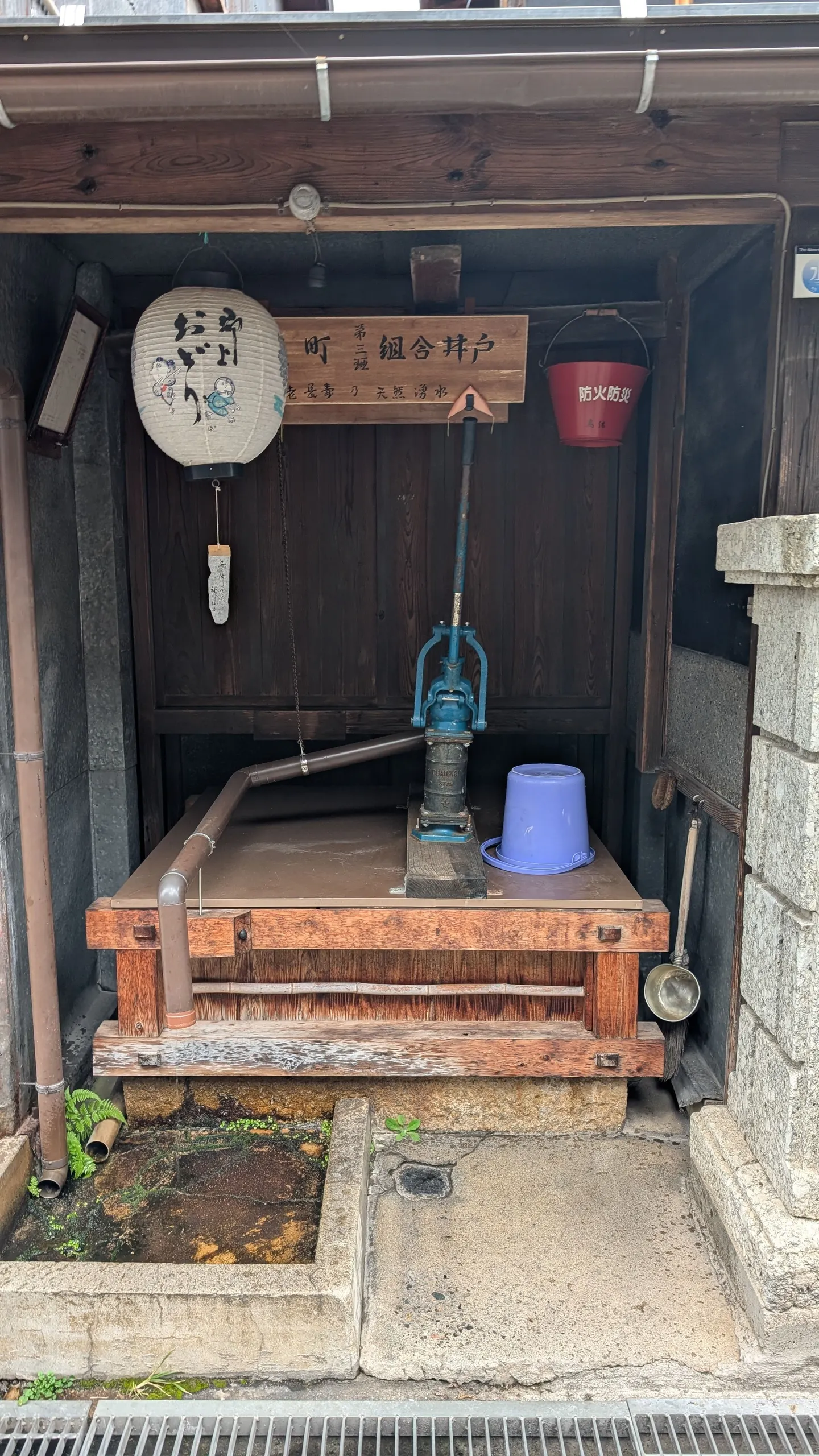
The town still has its old covered washing spots, called mizubune: a row of stepped tanks fed by spring water. The top tank is for drinking, the next one for washing vegetables, the last one for the dishes, and the leftover scraps flow out to the carp, who clean up the rest. Nothing goes to waste.
The red bridge
Then back towards the river, with Gujō Hachiman Castle up on the hill above the town.
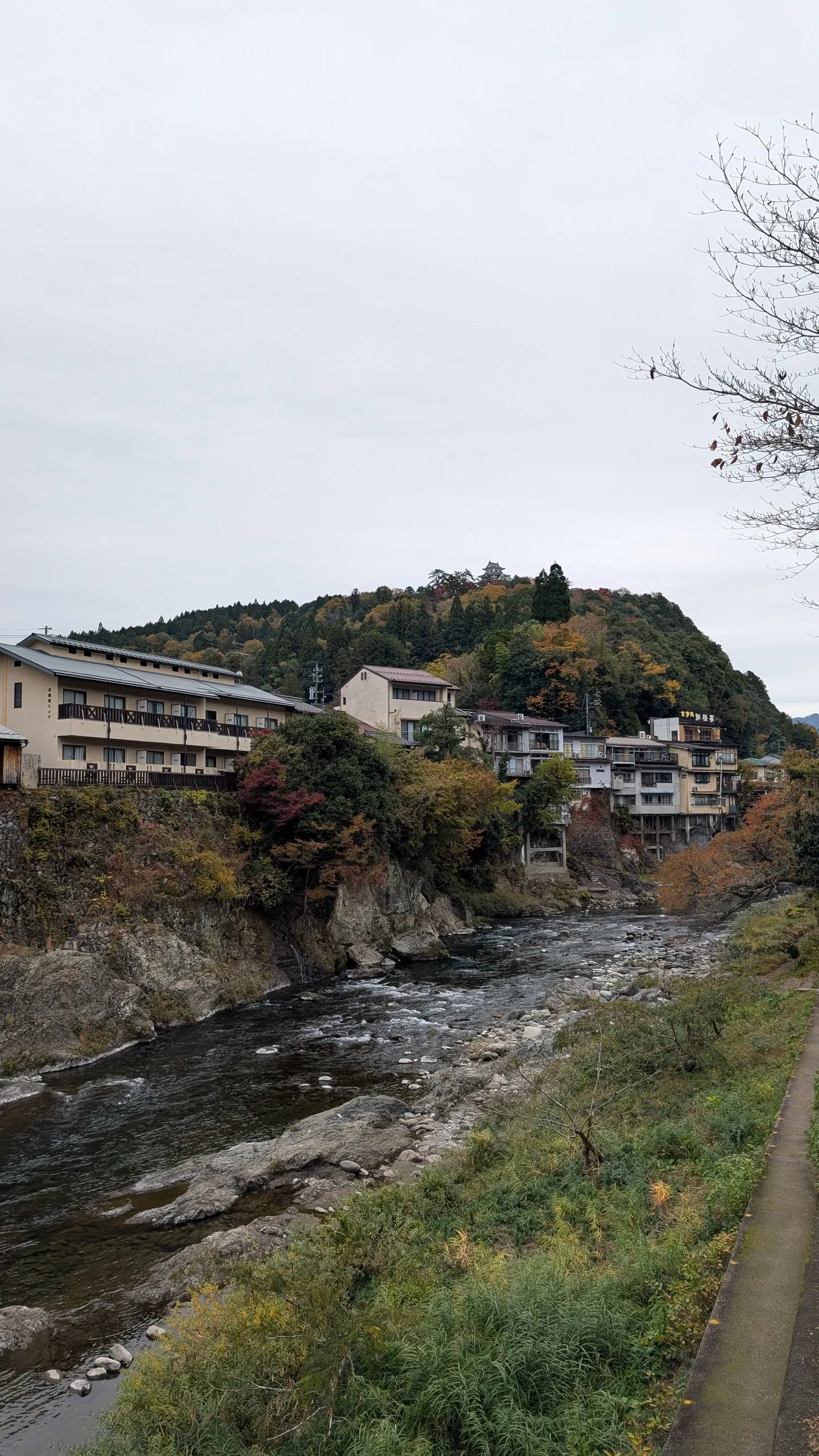
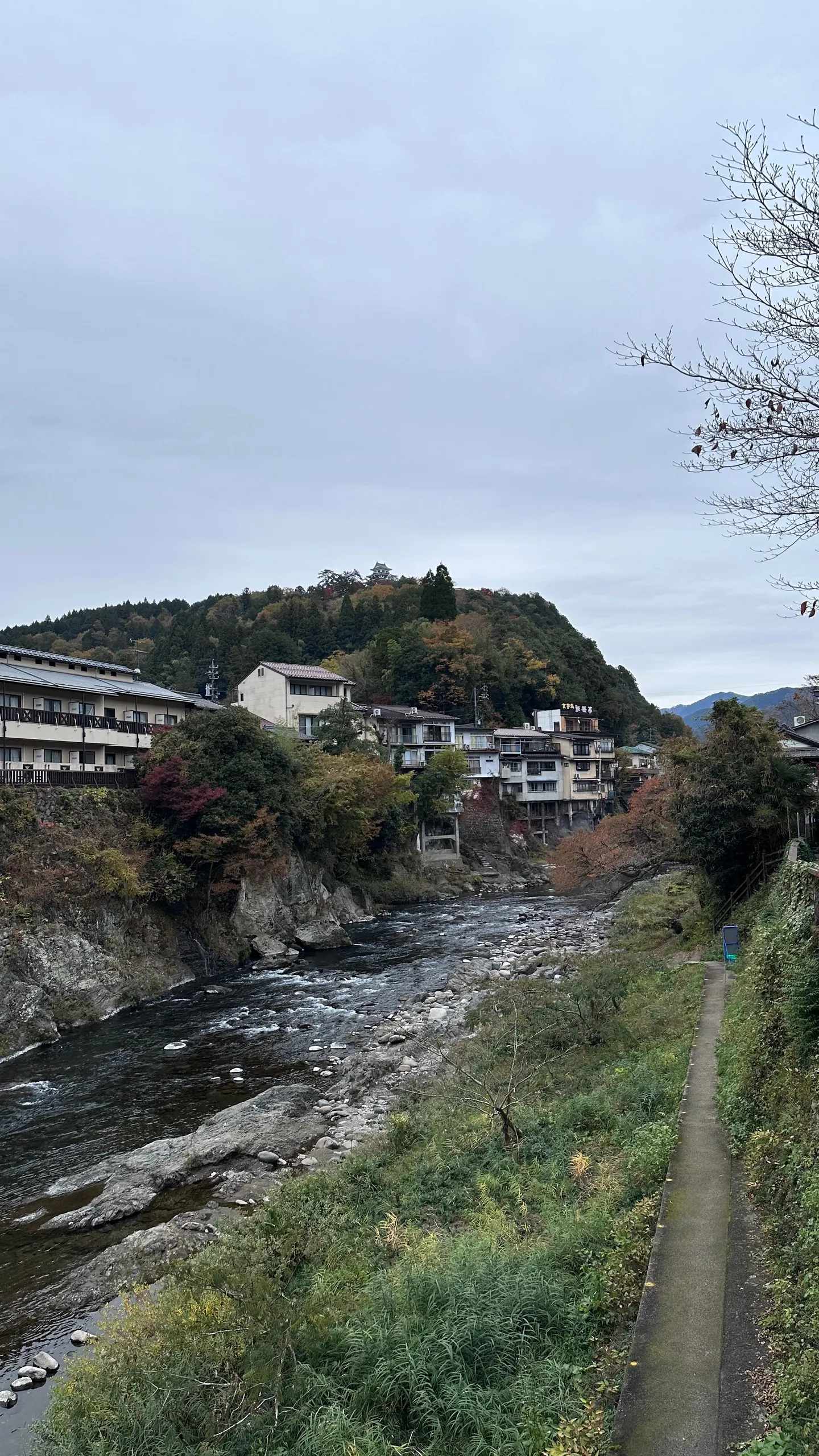
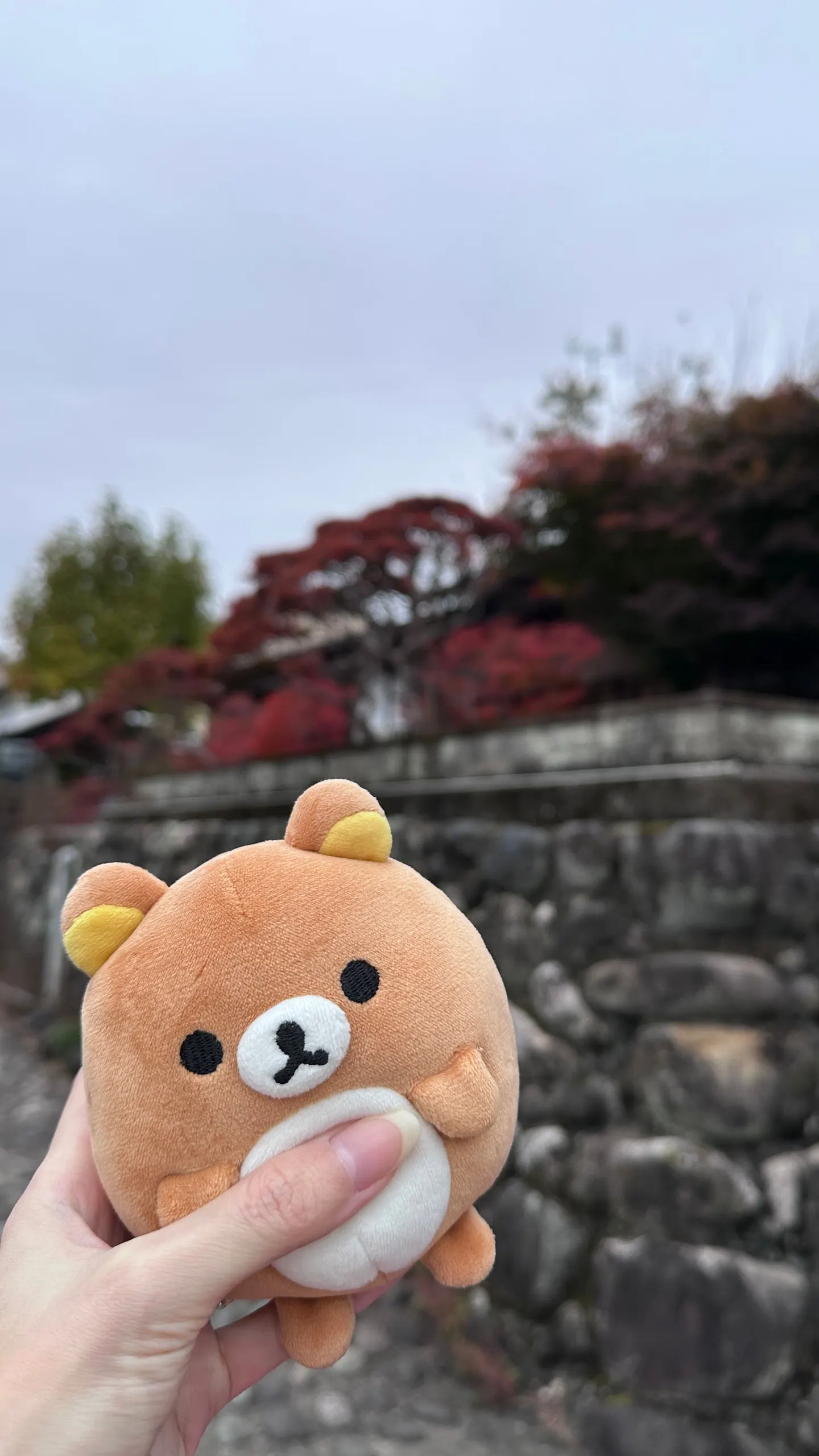
The best view was from a red bridge over the Yoshida, with the castle hill behind us. Rilakkuma got his turn too.
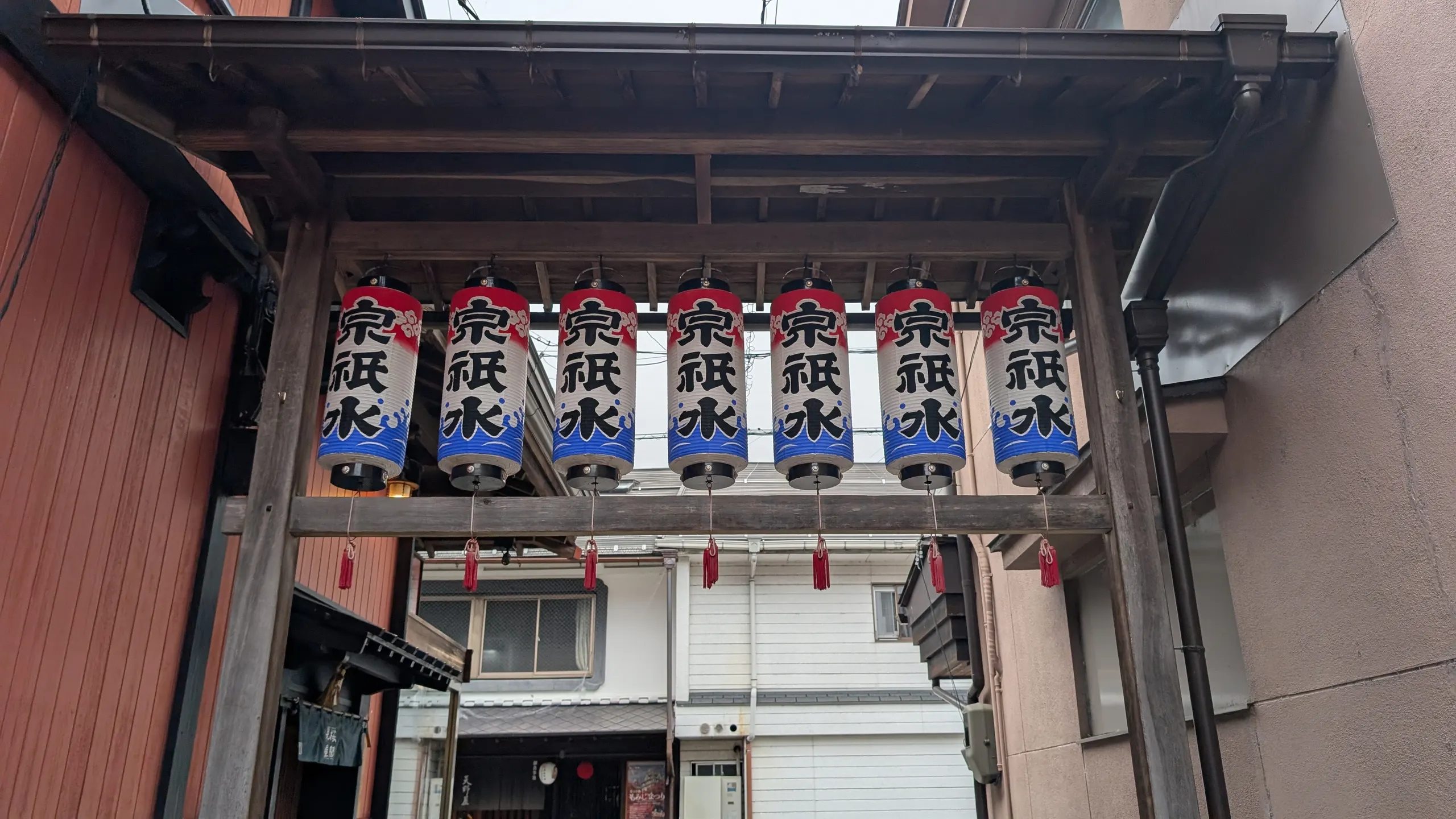
On the walk back to the bus: one more canal, one more photo of Minmin, and a gate hung with paper lanterns.
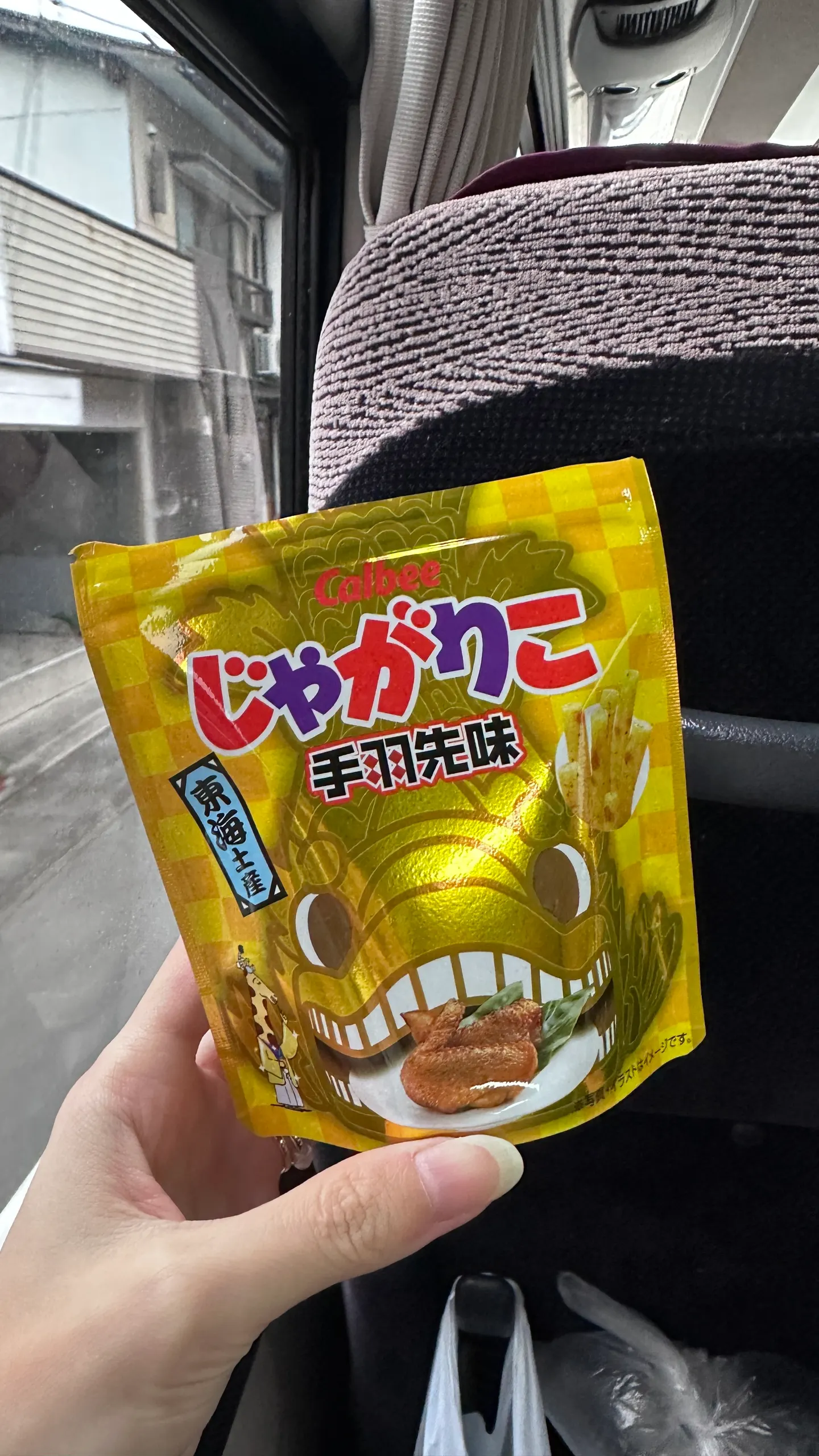
Back on the bus, Minmin opened a pack of Jagarico in tebasaki flavour, Nagoya’s chicken wings in potato stick form. Snacks sorted for the next two hours.
Next stop: Takayama, for ramen and the old town.
Postcard from Gujō Hachiman, Gifu
A stone lane beside a spring-fed canal full of carp, next to the old town hall. A short walk south of Shinbashi bridge, in the middle of Gujō Hachiman.