The Shimanami Kaido
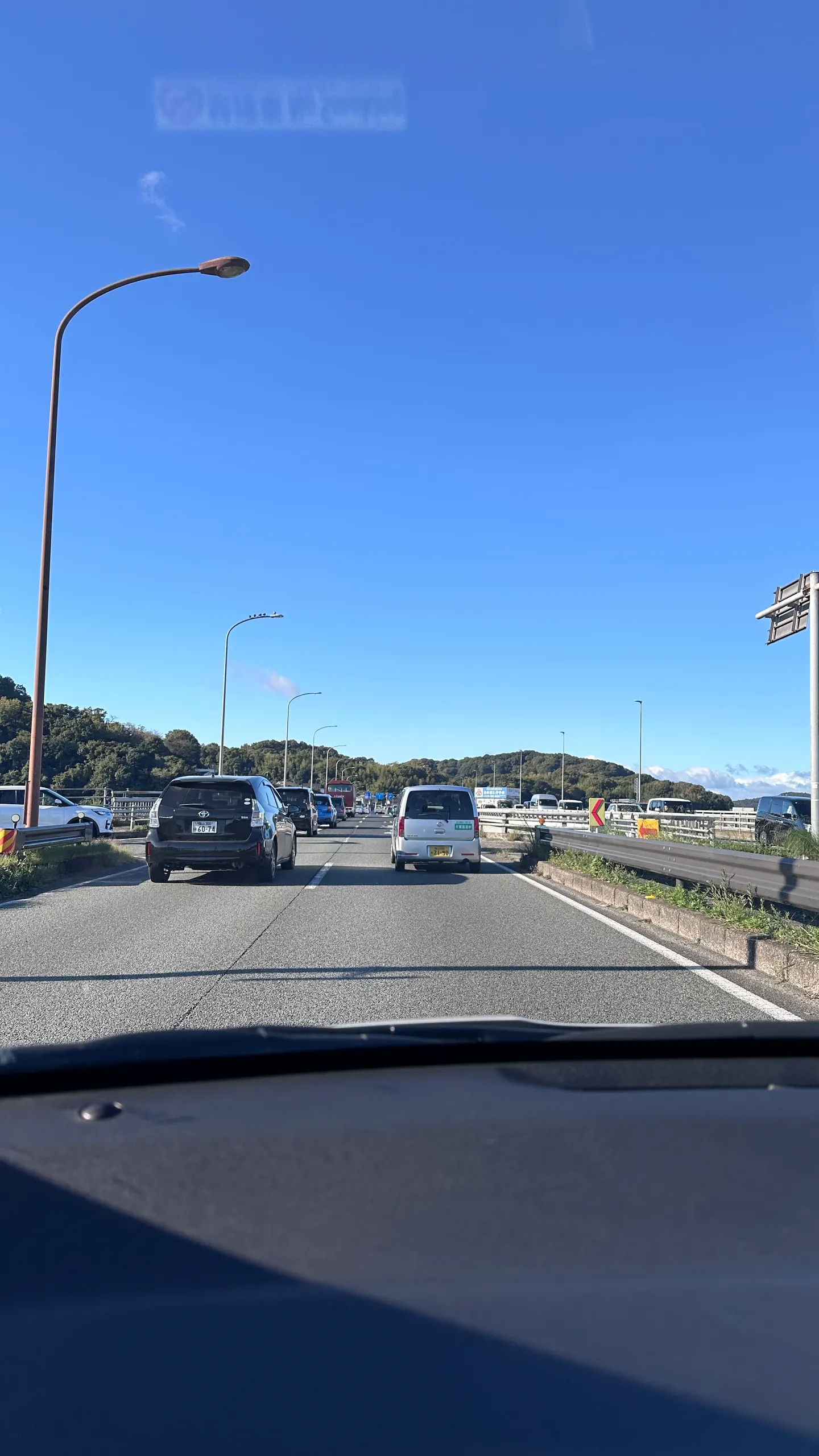
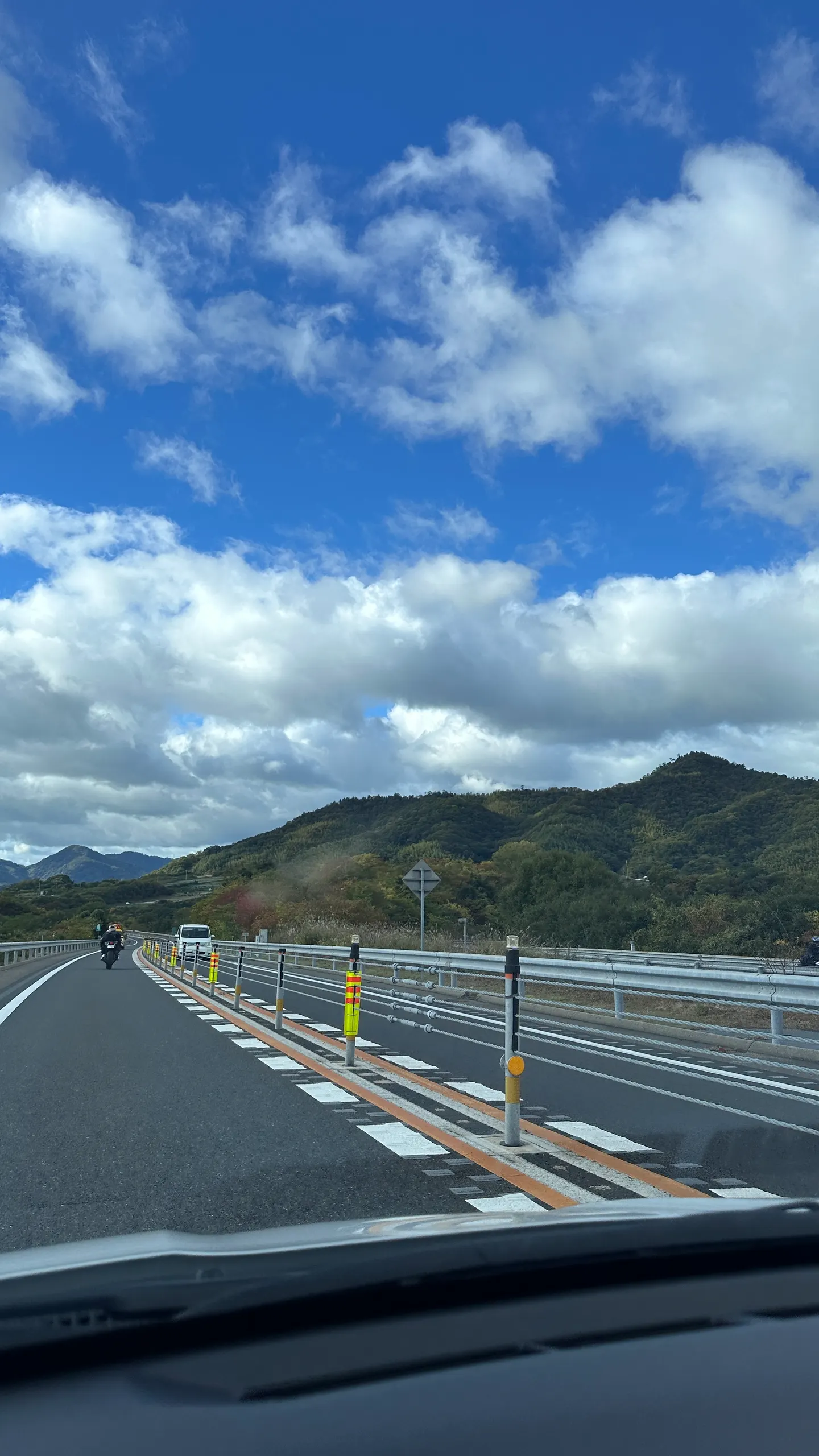
After Kosanji, back on the Shimanami Kaido. It’s the road that hops from Onomichi in Hiroshima to Imabari in Shikoku, about 60 km across six islands and a string of bridges. It’s famous as a cycling route, with its own bike lanes on every bridge. We drove it, no regrets. With a pregnant wife in the passenger seat, 60 km of hills on a bicycle was never on the table.
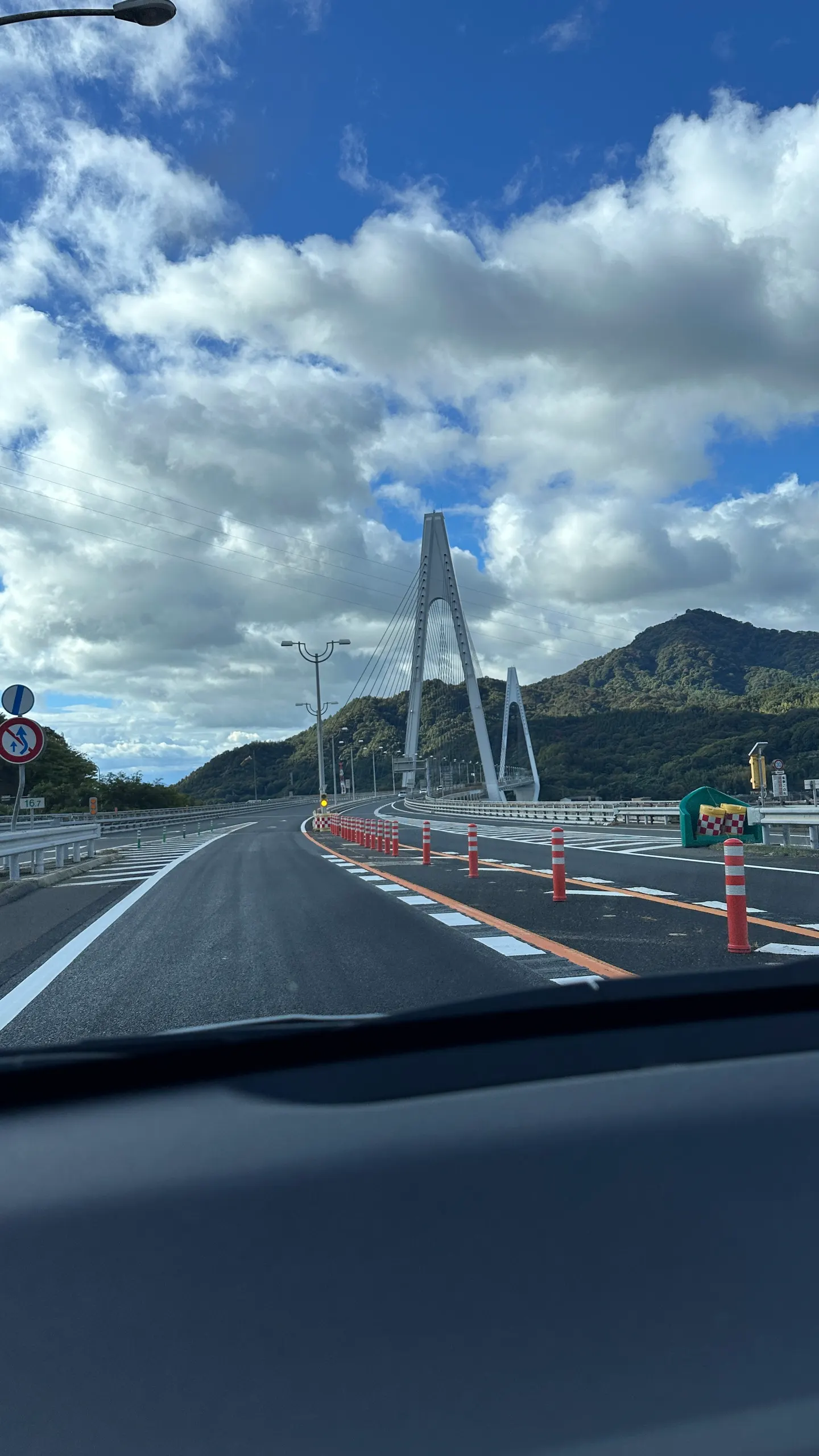
The road feels made for sightseeing. The weather was perfect, the sea was flat and blue, and every bridge gives you a new view of the islands. What stood out were the vantage points and rest areas along the way, all very chillax: pull over, look at the sea, take a break. Minmin needed her breaks anyway.
The Tatara Bridge
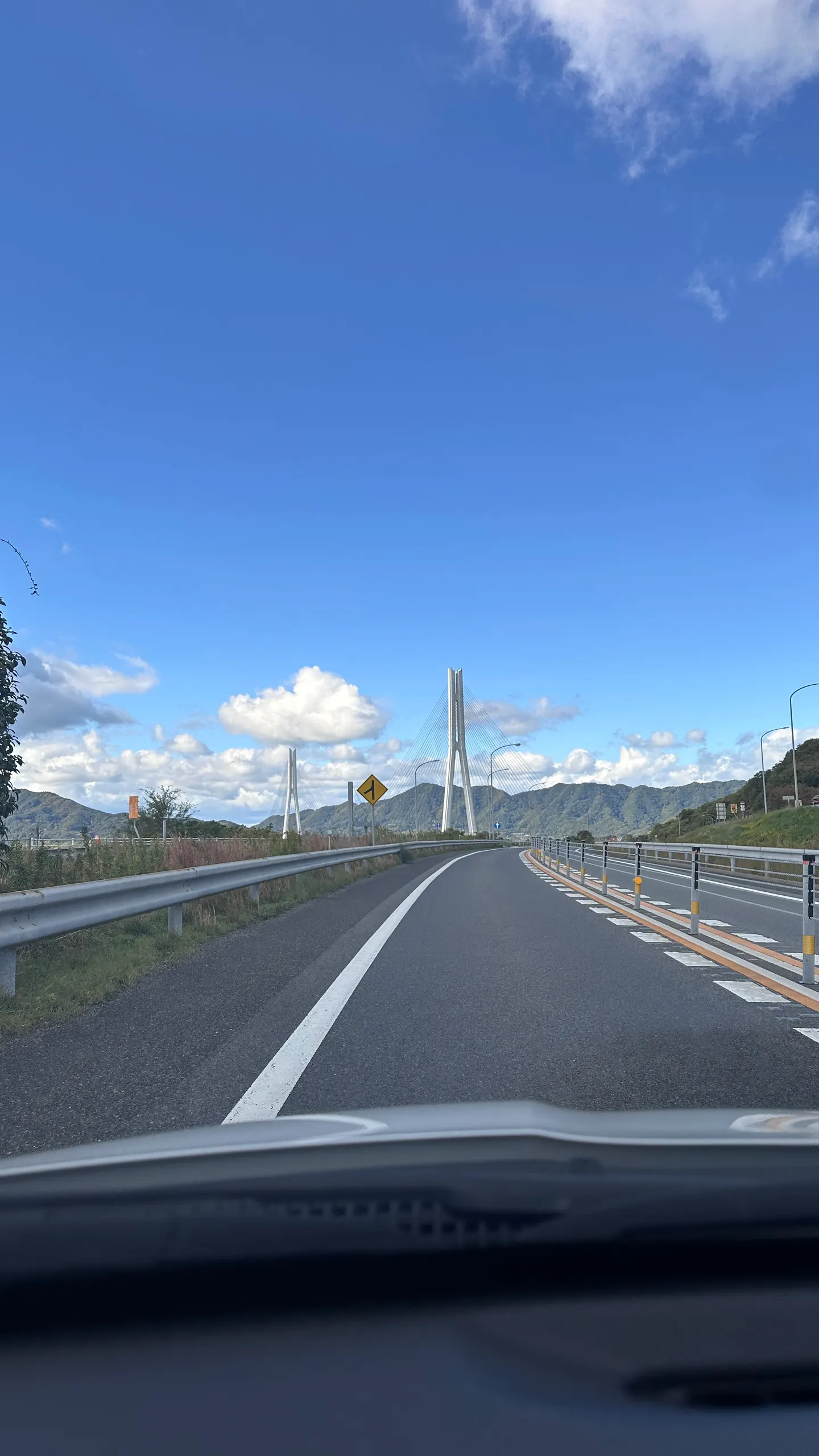
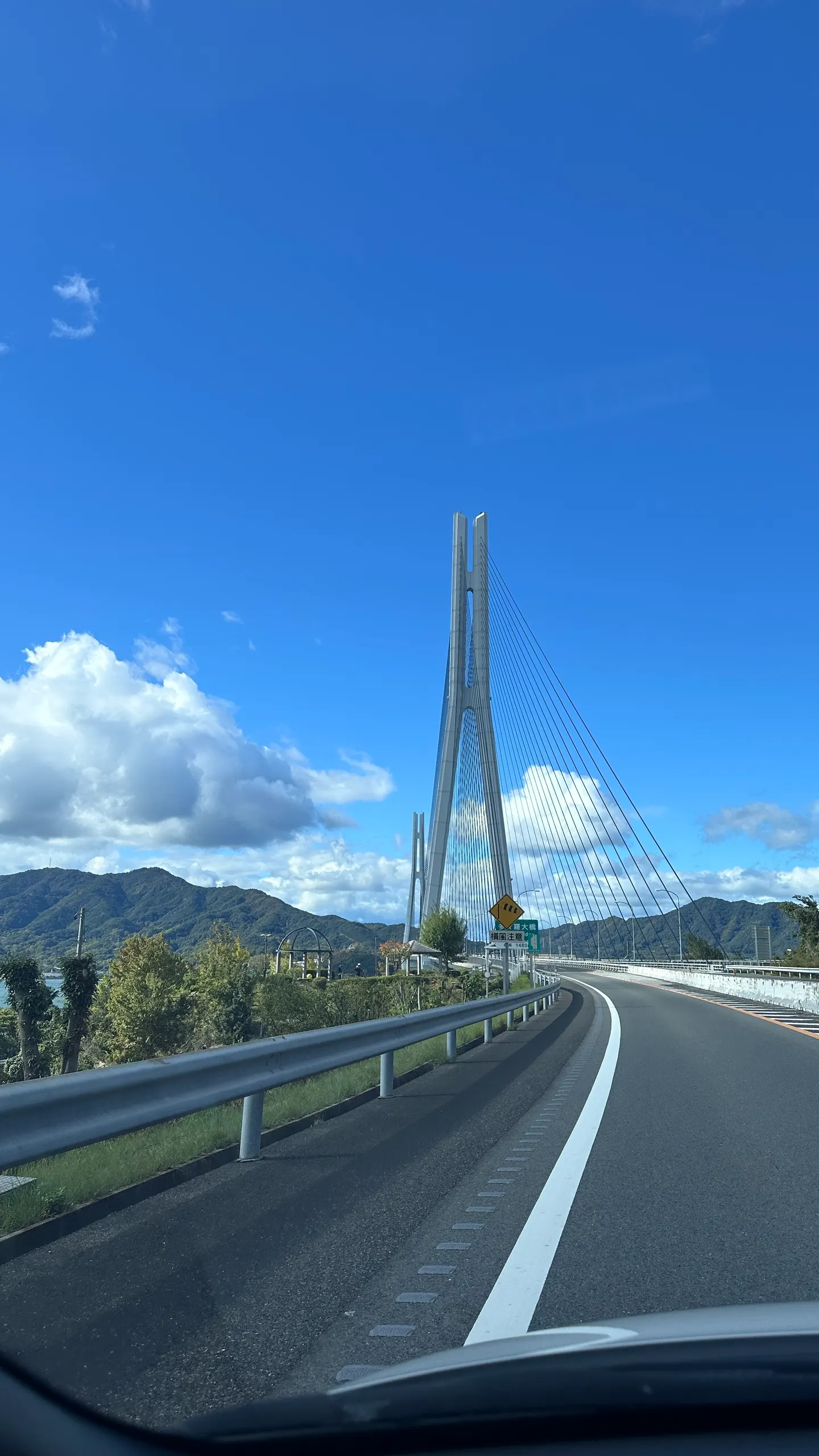
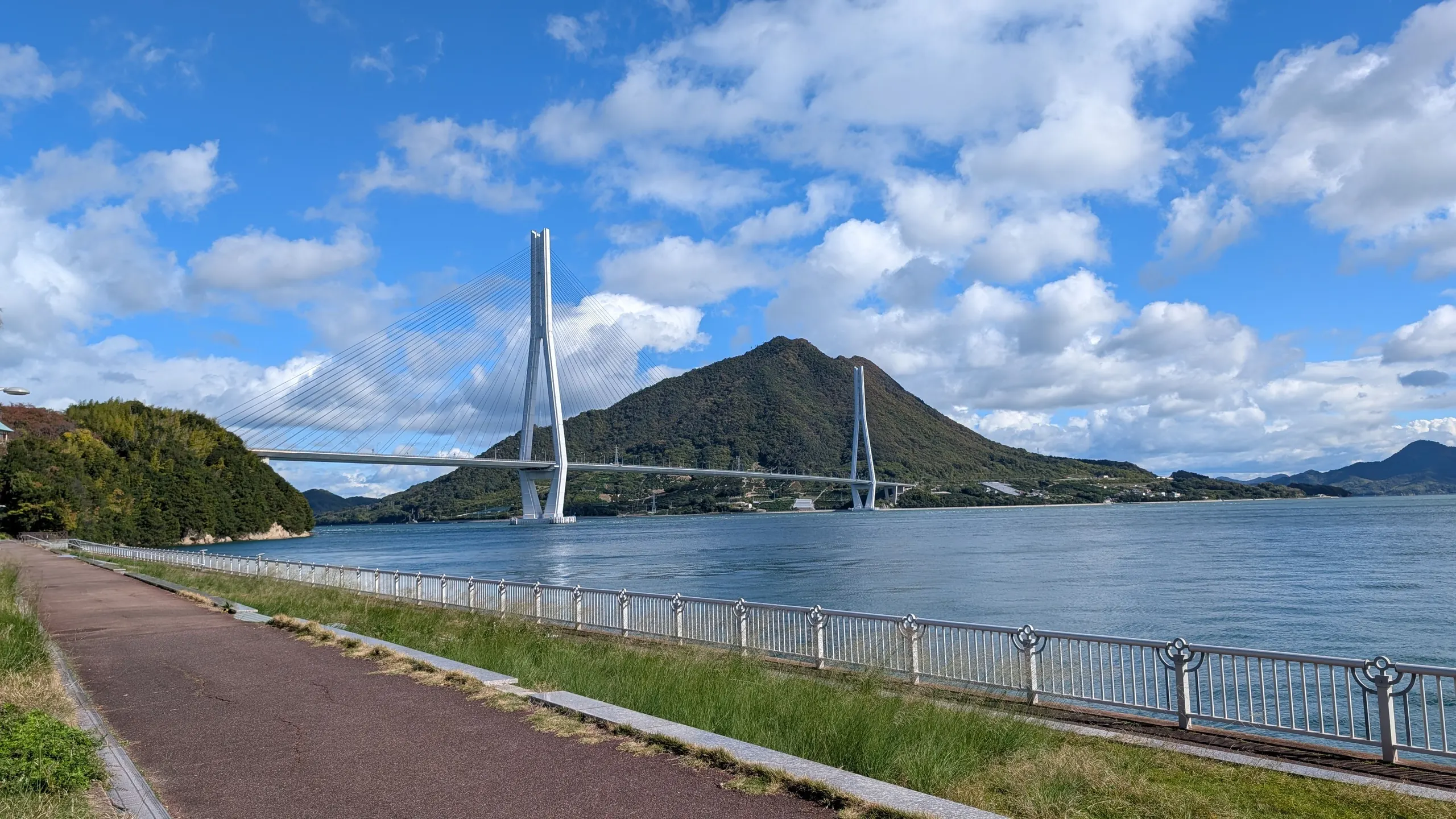
The big one is the Tatara Bridge, the huge cable-stayed bridge from Ikuchijima to Omishima. It’s almost 1.5 km long, and when it opened in 1999 it was the longest cable-stayed bridge in the world. Driving towards it, the towers just keep getting bigger, and then you’re under them and it’s over in a minute.
The Bell of Happiness
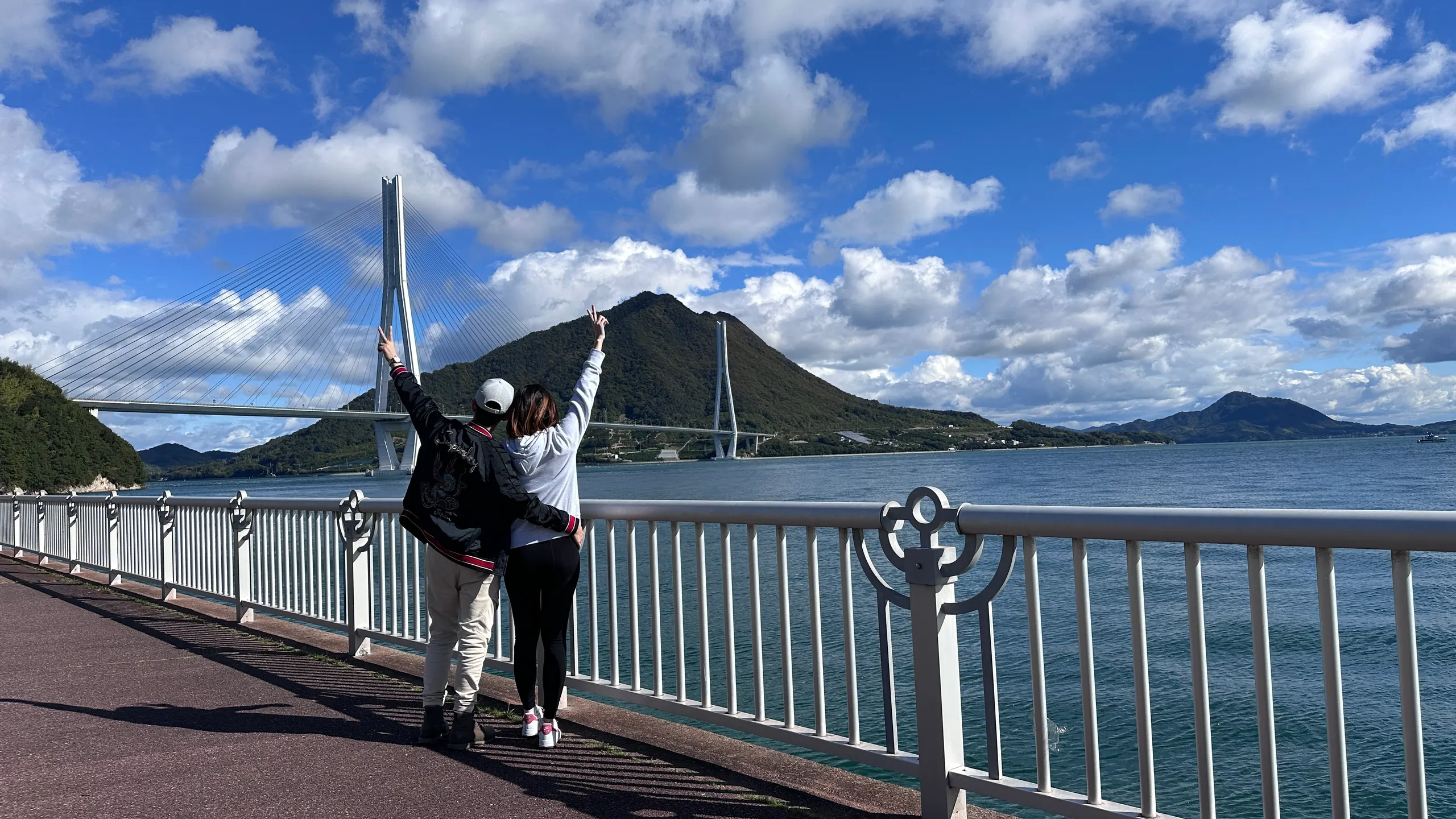
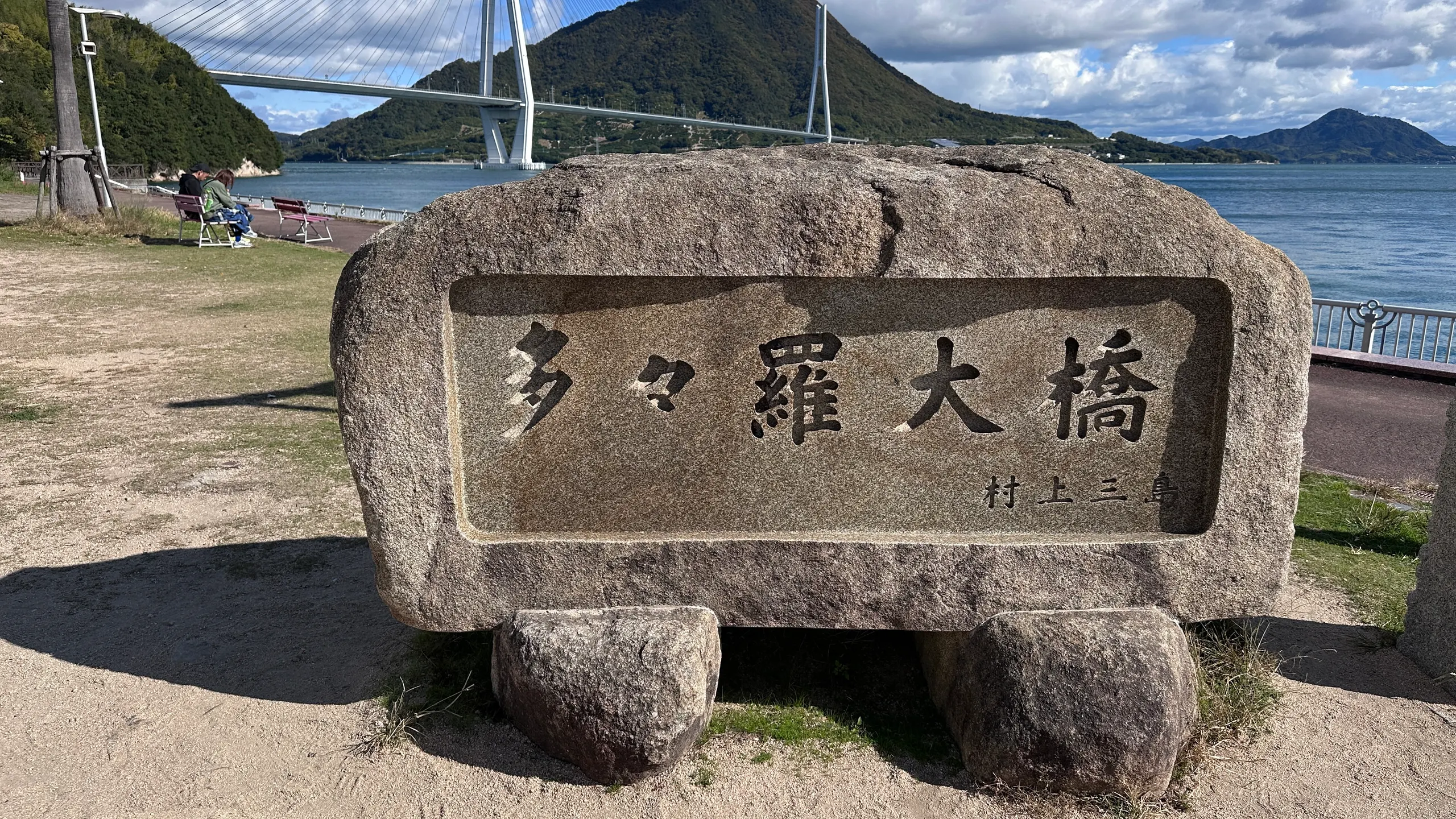
On the Omishima side there’s a roadside station, Tatara Shimanami Park, with a promenade by the water to see the bridge properly. There’s also a brick clock tower holding a “Bell of Happiness”, put up when the Tatara Bridge was twinned with the Pont de Normandie in France. Minmin rang it, obviously. Then the usual photos at the railing, arms up, bridge behind.
It’s a good place to stretch your legs, and most people driving the Shimanami Kaido seem to stop here for exactly that. A fresh orange juice from the stall by the bridge, because this is citrus country. The islands here grow mikan and lemons everywhere, and you can taste it.
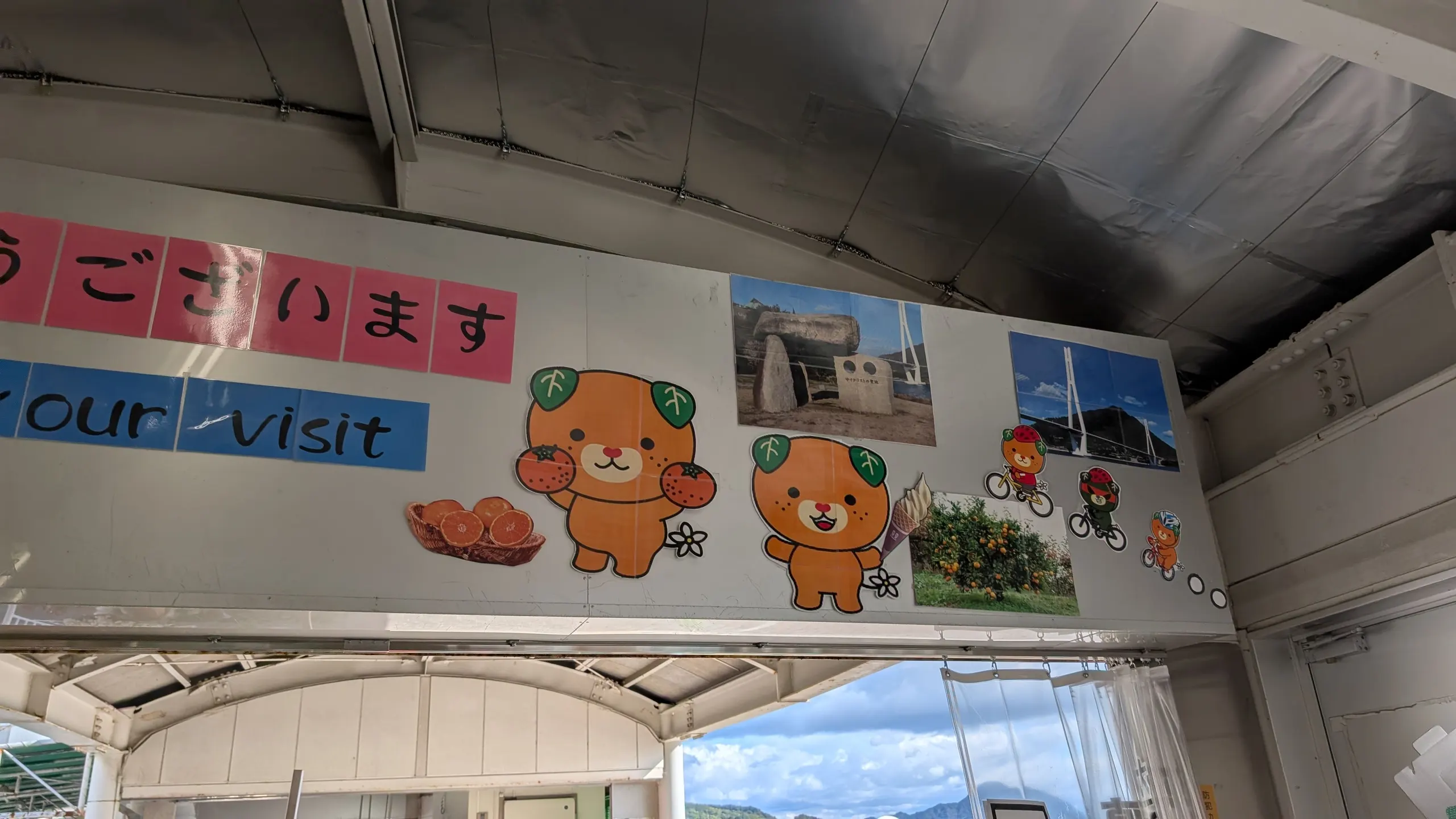
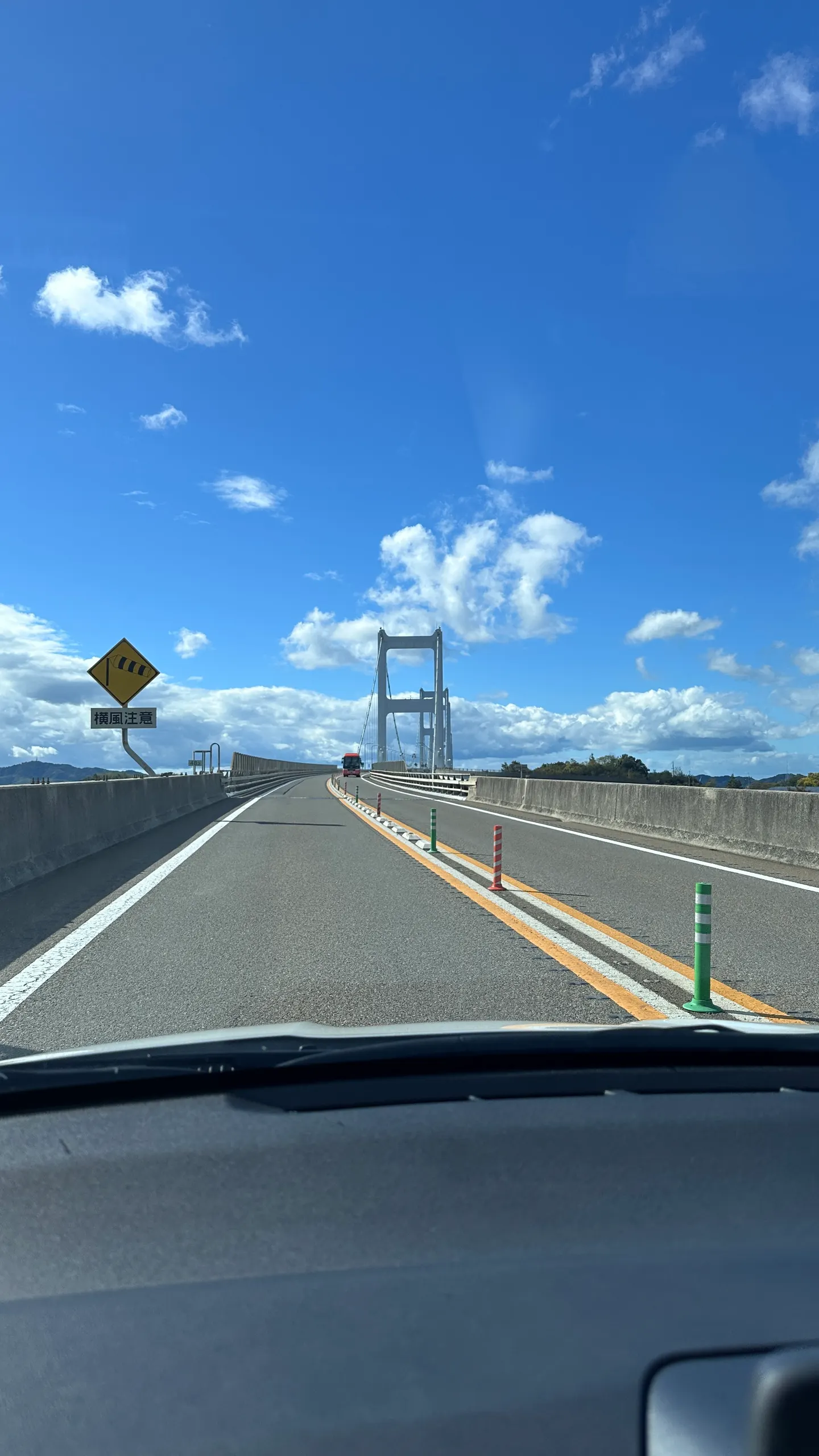
From there it’s the last few bridges, over Hakatajima and Oshima, and then down into Imabari and Shikoku proper. Onward to Matsuyama!
Postcard from Omishima, Imabari, Ehime
A roadside station on Omishima at the foot of the Tatara Bridge, with a viewpoint by the water, the Bell of Happiness, and local citrus for sale.